Hard water is a common problem in many American homes. Minerals like calcium and magnesium naturally occur in groundwater, and over time they can create scale buildup inside pipes, water heaters, dishwashers, and other appliances. A saltless water softener system offers a modern alternative to traditional salt-based softeners by conditioning water rather than removing minerals entirely. Instead of using salt and regeneration cycles, these systems change the structure of hardness minerals so they cannot stick to surfaces.
For homeowners looking for a low-maintenance and environmentally friendly solution, saltless water softener systems provide several advantages. They prevent scale buildup, require little maintenance, and preserve beneficial minerals in drinking water. Many households choose a whole house saltless water softener because it operates without salt, electricity, or wastewater discharge, making it an efficient and practical option for moderate hard water conditions.
Understanding Hard Water in Residential Plumbing
Hard water forms when groundwater passes through rock and soil containing minerals such as calcium and magnesium. According to data referenced by the United States Geological Survey, more than 85 percent of homes in the United States have hard water to some degree.
Over time, these minerals accumulate as scale. The buildup appears as white residue on fixtures, cloudy spots on dishes, and crusty deposits inside appliances.
Common signs of hard water include:
- White spots on glassware and dishes
- Soap that does not lather well
- Dry skin or dull hair after showering
- Scale buildup on faucets and showerheads
- Reduced efficiency in water heaters and washing machines
A saltless water softening system addresses these issues by preventing minerals from sticking to surfaces rather than removing them from the water.
How a Saltless Water Softening System Works
Traditional water softeners rely on ion exchange, a process that removes calcium and magnesium and replaces them with sodium. While effective, those systems require regular salt refills and periodic regeneration cycles that discharge wastewater.
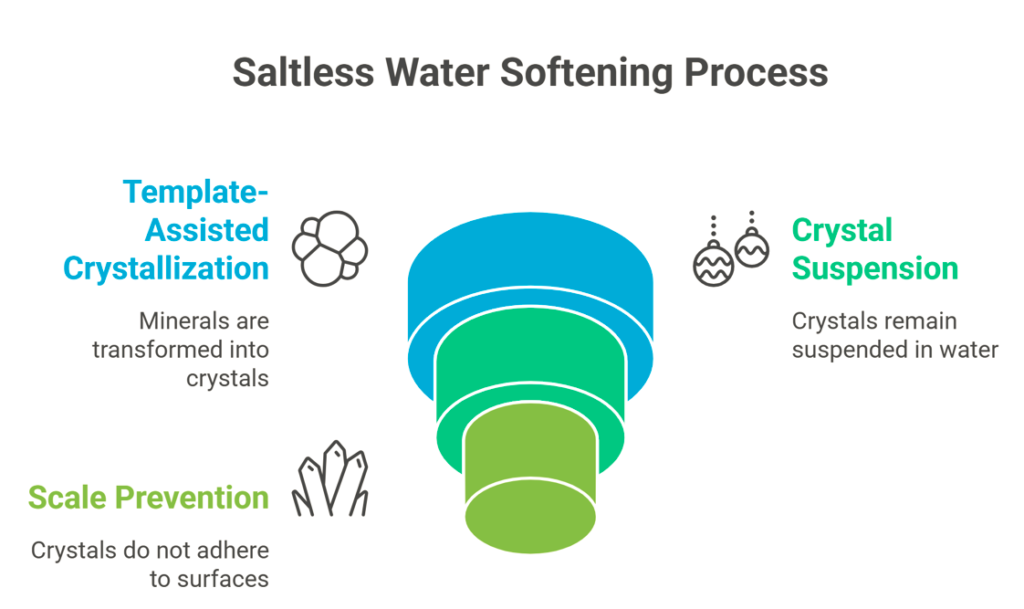
Saltless water softener systems use a different approach. Many models rely on Template Assisted Crystallization technology, commonly known as TAC.
This technology converts hardness minerals into microscopic crystals that remain suspended in the water. Because the crystals cannot attach to surfaces, they pass harmlessly through pipes and appliances.
As a result, scale buildup is dramatically reduced without removing beneficial minerals.
Key characteristics of a saltless system include:
- No salt or chemicals
- No electricity required in most models
- No wastewater discharge
- Compact installation design
- Minimal maintenance
These features make saltless conditioners attractive for homeowners who want a simpler water treatment solution.
Key Benefits of a Saltless Water Softener System
Salt-free conditioning systems offer several practical advantages for homeowners dealing with hard water.
Scale Prevention Without Mineral Removal
The primary benefit is scale prevention. Instead of allowing minerals to accumulate on pipes and heating elements, the system changes their structure so they cannot stick.
This helps protect:
- Water heaters
- Dishwashers
- Washing machines
- Coffee makers
- Plumbing fixtures
Over time, preventing scale can reduce repair costs and improve appliance efficiency.
No Salt or Chemical Maintenance
Traditional softeners require homeowners to purchase and refill heavy salt bags every few weeks. Saltless systems eliminate this step entirely.
With a saltless water softener system, there is:
- No salt storage
- No lifting heavy bags
- No brine tank maintenance
This simplicity makes the system especially appealing for homeowners who prefer low-maintenance equipment.
Eco Friendly Water Treatment
Salt-based systems release brine wastewater during regeneration cycles. Some regions restrict these systems because excess sodium can affect wastewater treatment plants and local ecosystems.
Saltless conditioners do not produce wastewater. This makes them a more environmentally responsible option for many households.
Retention of Healthy Minerals
Unlike ion exchange softeners, saltless conditioners keep calcium and magnesium in the water. These minerals contribute to taste and may provide nutritional value in small amounts.
Many homeowners appreciate drinking water that retains its natural mineral content.
Lower Long Term Operating Costs
Although purchase prices vary, operating costs for saltless systems are typically lower because there are no ongoing salt purchases.
Over time, this can reduce the total cost of ownership compared with traditional softeners. Many homeowners researching treatment options also compare the salt free water softener cost to understand how equipment prices vary between conditioning systems and conventional ion exchange softeners.
Whole House Saltless Water Softener Installation
Most homeowners install a whole house saltless water softener where the main water line enters the home. This ensures every fixture and appliance benefits from scale protection.
Typical installation steps include:
- Shut off the main water supply
- Install a pre filter to remove sediment or chlorine
- Connect the conditioning tank to the main water line
- Restore water flow and test for leaks
Because these systems require no drain line or electrical connection, installation is often simpler than installing a traditional softener.
Homeowners interested in professional installation costs often compare pricing using resources such as the installation guides available on Water Softener Cost, including detailed breakdowns for cost to install water softener expenses and plumbing requirements.
Average Cost of Saltless Water Softener Systems
Prices vary based on brand, system capacity, and installation method. The following table provides a general overview.
| System Type | Average Equipment Cost | Installed Cost |
| Compact saltless conditioner | $500 – $900 | $800 – $1,300 |
| Standard whole house system | $900 – $1,800 | $1,200 – $2,500 |
| High capacity systems | $1,800 – $3,500 | $2,500 – $4,500 |
Homes with larger plumbing systems or higher water demand typically require higher capacity units.
Installation complexity can also influence the final price. Many homeowners researching equipment budgets also review the home water softener system cost to compare conditioning units with traditional salt-based systems.
Saltless vs Traditional Water Softener Comparison
Many homeowners compare both technologies before making a decision.
| Feature | Saltless Water Softener Systems | Salt Based Water Softeners |
| Mineral removal | No | Yes |
| Scale prevention | Yes | Yes |
| Salt required | No | Yes |
| Maintenance | Low | Moderate |
| Wastewater discharge | None | Yes |
| Electricity | Usually no | Yes |
| Water feel | Natural | Slippery |
Both systems can protect plumbing from scale, but they operate differently and suit different situations.
Pros and Cons of Saltless Water Softener Systems
Like any water treatment technology, saltless systems have advantages and limitations.
Pros
- Minimal maintenance
- No salt or chemicals
- Environmentally friendly
- Compact and easy to install
- Lower long term operating costs
- Retains natural minerals in drinking water
Cons
- Does not remove hardness minerals
- Soap lather improvement may be minimal
- Less effective in extremely hard water areas
- Some systems require periodic media replacement
- Understanding these tradeoffs helps homeowners choose the system that best fits their needs.
Ideal Homes for Saltless Water Softener Systems
Saltless conditioners work best in homes with moderate hard water levels. They are particularly useful in the following situations:
- Homes with limited space for large softener tanks
- Properties in areas with brine discharge restrictions
- Households wanting a low maintenance water treatment system
- Homeowners who prefer mineral rich drinking water
- Many condos, apartments, and smaller homes also benefit from their compact design.
Maintenance Requirements
One of the biggest advantages of saltless systems is minimal maintenance.
Typical upkeep includes:
- Replacing the pre filter every 6 to 12 months
- Inspecting connections periodically
- Replacing the conditioning media every 3 to 5 years depending on water usage
Compared with salt-based softeners that require regular regeneration cycles and salt refills, this maintenance schedule is relatively simple.
Homeowners often explore cost comparisons using Water Softener Cost’s water softener maintenance cost breakdown to estimate long term expenses.
How Saltless Systems Protect Appliances
Scale buildup inside appliances can reduce efficiency and increase energy consumption.
For example:
- A water heater with scale deposits may lose efficiency and require more energy to heat water.
- Dishwashers may develop clogged spray arms.
- Washing machines can accumulate mineral residue on internal parts.
By preventing scale from sticking to surfaces, a saltless water softening system helps maintain appliance performance and extend equipment lifespan.
In many homes, preventing scale buildup can reduce appliance repairs and improve overall energy efficiency.
Common Mistakes When Choosing a Saltless System
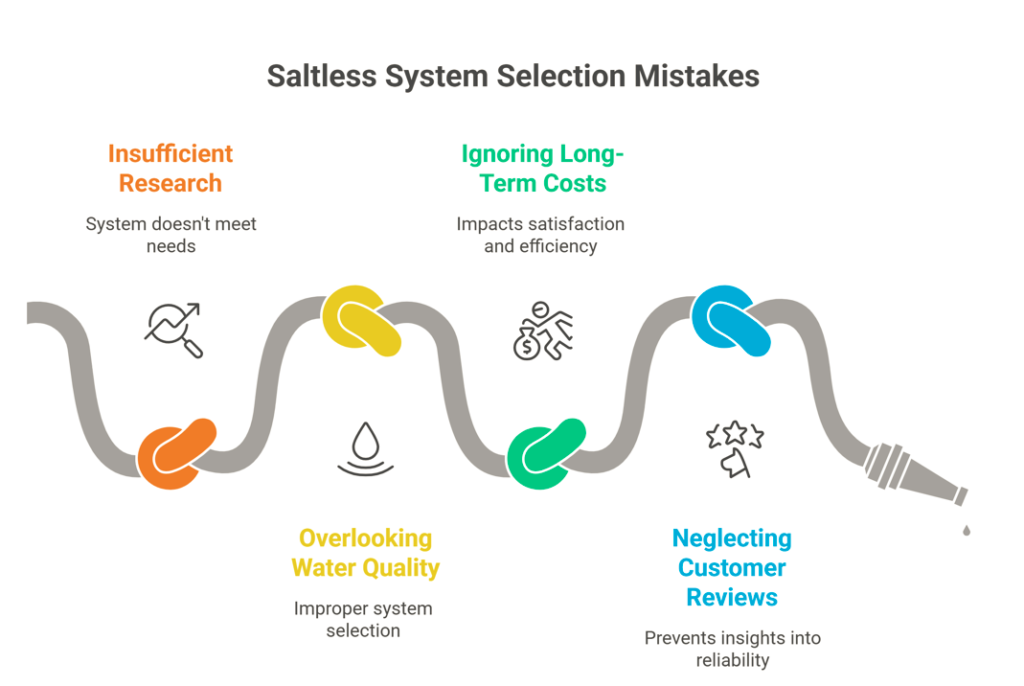
Some homeowners purchase water conditioning equipment without fully understanding their water quality or system requirements.
Avoid these common mistakes:
Skipping a Water Test
Water hardness varies widely by location. Testing water helps determine whether a saltless system is suitable.
Choosing the Wrong Size System
Undersized conditioners may struggle to treat water effectively, especially in larger households.
Ignoring Pre Filtration
Sediment and chlorine can reduce the effectiveness of conditioning media. Installing a pre filter improves system performance.
Expecting Soft Water Feel
Saltless systems prevent scale but do not produce the slippery feel associated with traditional softened water.
Setting realistic expectations ensures homeowners remain satisfied with the system.
DIY Cost Saving Tips for Installation
Installing a saltless water softener system can be a manageable project for experienced DIY homeowners.
Helpful tips include:
- Use Flexible Plumbing Connectors
- Flexible connectors simplify installation and reduce the need for complex pipe modifications.
- Install a Shutoff Valve
- Adding a shutoff valve before the system makes maintenance easier in the future.
- Plan Adequate Space
- Ensure enough room around the unit for filter replacement and servicing.
- Follow Manufacturer Flow Rate Guidelines
Choosing a system with sufficient capacity ensures proper water conditioning throughout the home.
Even with DIY installation, some homeowners choose professional help when modifying main plumbing lines. When comparing installation options, homeowners sometimes research the average cost of a water softener and installation pricing to better understand total project costs.
Misconceptions About Saltless Water Softeners
Several myths surround salt-free systems.
Misconception: They Do Nothing
Saltless conditioners do not remove minerals, but they significantly reduce scale buildup.
Misconception: They Work the Same as Salt Systems
Both technologies address hard water but through different mechanisms.
Misconception: They Require No Maintenance
While minimal, periodic filter and media replacement is still necessary.
Understanding these differences helps homeowners choose the correct water treatment solution.
Saltless Water Softener Systems and Drinking Water Quality
Many homeowners appreciate that saltless conditioners retain natural minerals. Calcium and magnesium contribute to water taste and may support overall mineral intake.
Because no sodium is added, these systems are also beneficial for individuals who prefer lower sodium drinking water.
The absence of salt discharge also protects septic systems and local waterways.
Frequently Asked Questions
What is a saltless water softener system?
A saltless water softener system is technically a water conditioner that prevents mineral scale buildup by altering the structure of hardness minerals rather than removing them from the water.
Do saltless water softener systems remove calcium and magnesium?
No. These systems keep the minerals in the water but convert them into crystals that cannot stick to pipes or appliances.
Are saltless water softener systems effective?
Yes. They are effective at preventing scale buildup, particularly in homes with moderate hard water levels.
Do saltless systems require electricity?
Most systems operate passively and do not require electricity.
How long do saltless systems last?
The conditioning media typically lasts between three and five years, although some systems can last longer depending on water conditions.
Do saltless systems improve soap lather?
They may slightly improve cleaning efficiency, but they do not produce the same soap lather as traditional softened water.
Is installation difficult?
Installation is often simpler than salt-based systems because there is no drain line, brine tank, or electrical connection required.
Can a saltless system protect appliances?
Yes. By preventing scale buildup, these systems help extend the life of appliances such as water heaters and dishwashers.
Are saltless water softeners environmentally friendly?
Yes. They do not produce brine wastewater or require salt, making them a more environmentally responsible choice.
Are saltless systems suitable for extremely hard water?
In areas with very high hardness levels, a traditional ion exchange softener may provide better results.
Final Thoughts
A saltless water softener system provides an efficient and low maintenance solution for homeowners dealing with hard water. By preventing mineral scale without removing beneficial minerals, these systems protect plumbing, extend appliance life, and reduce long term maintenance costs.
For many households, especially those seeking an environmentally friendly alternative to traditional salt-based systems, saltless water softener systems offer a practical balance between performance and simplicity. When installed properly and matched to the home’s water hardness level, a whole house saltless water softener can provide years of reliable protection against scale while maintaining the natural quality of your water.
Another important factor homeowners consider is the overall investment required for a water treatment system. Comparing equipment pricing, installation expenses, and long-term operating costs can help determine the most practical solution for a specific household. Evaluating total costs of water softeners and conditioning systems ensures homeowners understand both upfront expenses and long-term savings from scale prevention and reduced appliance maintenance.
With proper system sizing, regular filter replacement, and an understanding of water hardness levels, saltless water conditioning systems can provide reliable performance for many years while helping protect plumbing infrastructure and household appliances.