A saltless water softener is designed to reduce scale buildup in plumbing and appliances without using salt, electricity, or a regeneration cycle. Instead of removing calcium and magnesium like traditional systems, saltless water softener systems condition the water so minerals cannot stick to pipes and fixtures. For homeowners comparing water softener costs, installation requirements, and long-term maintenance, salt-free systems offer a low-maintenance alternative with fewer moving parts and no salt refills. However, they do not technically soften water, and that difference matters when deciding whether they are worth the investment.
Hard water affects nearly 85 percent of homes in the United States, according to the U.S. Geological Survey. That means mineral buildup inside water heaters, white residue on faucets, and shortened appliance lifespan are common household problems. A saltless water softening system aims to solve scale issues without adding sodium to drinking water or discharging brine into drains.
Understanding what these systems actually do, how much they cost, and how they compare to traditional softeners is critical before making a decision.
What Is a Saltless Water Softener?
A saltless water softener, often called a water conditioner, treats hard water without removing hardness minerals. Traditional salt-based systems use ion exchange to physically remove calcium and magnesium. Saltless water softeners alter the structure of those minerals so they remain in the water but cannot form a hard scale.
This distinction is important.
If your goal is silky, slippery-feeling water, a salt-free system will not provide that experience. If your goal is preventing scale inside plumbing and extending appliance lifespan, it may be a practical solution.
Most saltless water softener systems are installed at the point where water enters the home, making them suitable for whole-house protection.
How Does a Saltless Water Softening System Work?
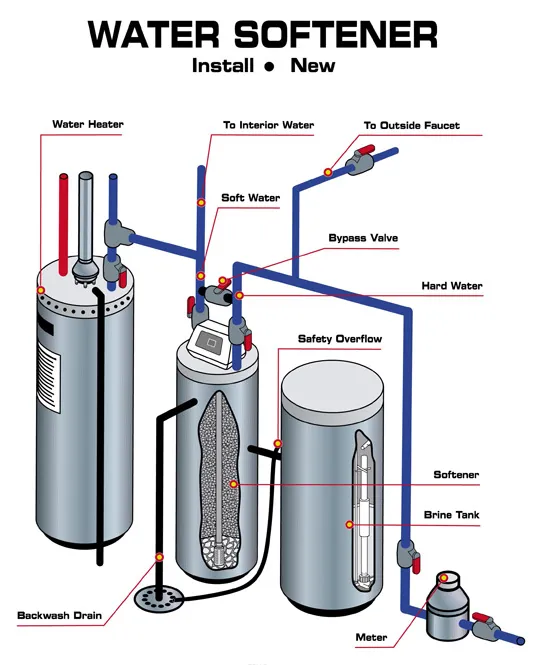
The most common technology used today is Template Assisted Crystallization, often abbreviated as TAC. Some manufacturers refer to it as Nucleation Assisted Crystallization.
Inside the tank are specialized media beads. When hard water passes through, calcium and magnesium attach briefly to nucleation sites on the media. They form microscopic crystals and then release back into the water. These crystals remain suspended and pass through the plumbing system without sticking to surfaces.
Because minerals are not removed, there is:
- No regeneration cycle
- No salt tank
- No wastewater discharge
- No electricity requirement
This differs from salt-based softeners, which periodically flush trapped minerals down the drain during regeneration.
The Environmental Protection Agency has documented how excess chloride from water softener brine can affect wastewater systems and local waterways. That environmental concern is one reason some homeowners consider saltless alternatives.
Do Saltless Water Softeners Really Work?
The answer depends on what you expect them to do.
They work well at reducing scale buildup in:
- Water heaters
- Dishwashers
- Tankless heaters
- Pipes
They do not:
- Remove hardness minerals
- Eliminate soap scum entirely
- Change water texture
If your home has moderate hardness and your main concern is protecting plumbing and appliances, a saltless water softener system can perform effectively.
If your home has extremely hard water or high iron levels, a traditional ion-exchange softener may deliver better overall results.
Saltless Water Softener Cost Breakdown
One of the biggest questions homeowners ask is cost. Let’s break it down clearly.
Equipment Cost
| System Type | Average Unit Cost | Installed Cost |
| Basic saltless system | $800 – $1,500 | $1,200 – $2,500 |
| Premium whole-house saltless system | $1,500 – $3,500 | $2,000 – $5,000 |
| Whole house water softener and filtration system cost | $2,000 – $6,000 | $3,000 – $8,000 |
Salt-free water softener cost is typically comparable to mid-range salt systems but with lower long-term maintenance expenses.
For comparison, detailed breakdowns of traditional systems are covered in our guide on water softener installation cost at WaterSoftenerCost.com, where you can see how salt-based systems often add ongoing salt expenses.
Water Softener System Install Cost
Installation depends on:
- Plumbing accessibility
- Existing loop or bypass valve
- Pre-filtration requirements
- Regional labor rates
Typical water softener system install cost for saltless systems ranges between $400 and $1,500.
In cities like San Antonio, local demand and plumbing rates can influence pricing. Homeowners researching San Antonio water softener cost often find regional labor adds 10 to 20 percent to total expenses.
DIY installation is possible for experienced homeowners, especially if a plumbing loop already exists.
Maintenance Costs Compared to Salt Systems
Saltless systems are attractive because maintenance is minimal.
Ongoing Costs
| Maintenance Item | Saltless System | Salt-Based System |
| Salt refills | None | $100 – $300 per year |
| Electricity | None | Minimal |
| Media replacement | Every 6–10 years | Resin 8–12 years |
| Annual service | Rarely required | Often recommended |
Over a 10-year period, saltless systems may save $1,000 or more in salt purchases alone.
However, media replacement typically costs between $300 and $800 when required.
Comparing Major Salt-Free Brands
Here’s how leading systems generally compare.
Filtersmart
Known for long-lasting TAC media and low maintenance. Pricing typically ranges from $1,500 to $3,000 installed.
Pelican by Pentair
Offers reliable whole-house systems with strong warranties. Installed cost often falls between $1,800 and $4,000.
NuvoH2O
Uses citric acid technology rather than TAC. Systems cost around $1,000 to $2,000 installed and are popular for condos and smaller homes.
APEC
Offers catalytic media systems. Pricing usually starts near $900 for basic units.
When comparing brands, homeowners often ask about ecowater water softener cost as well. EcoWater primarily manufactures salt-based systems, with installed prices typically ranging from $1,500 to $3,500 depending on capacity and dealer pricing.
Salt-Based vs Saltless: Cost and Performance Comparison
| Feature | Saltless | Salt-Based |
| Removes hardness minerals | No | Yes |
| Prevents scale | Yes | Yes |
| Requires salt | No | Yes |
| Adds sodium | No | Yes |
| Wastewater discharge | No | Yes |
| Slippery water feel | No | Yes |
| Best for extreme hardness | Limited | Yes |
If your water hardness exceeds 15 grains per gallon, traditional softeners often perform better.
If hardness is moderate and scale prevention is your main goal, saltless water softeners may be enough.
Hidden Costs Homeowners Overlook
- Pre-filtration requirements
Many saltless systems require sediment or carbon pre-filters. That can add $200 to $800 upfront. - Iron removal
Saltless systems are not effective at treating iron. Additional filtration may cost $500 to $2,000. - High hardness limitations
Extremely hard water may reduce system effectiveness. - Plumbing modifications
Older homes may require updates before installation.
Understanding full costs of water softeners prevents surprises later.
Real-Life Example: Two Different Households
Home A
Moderate hardness at 8 grains per gallon
Primary concern: scale in tankless water heater
Best choice: saltless water softener system around $2,000 installed
Home B
Hardness at 22 grains per gallon
Complaints: stiff laundry, heavy soap scum
Better choice: traditional salt-based softener costing $3,000 installed
The difference lies in expectations and water chemistry.
DIY Installation: Is It Worth It?
If your home already has a softener loop and shutoff valves, DIY installation may save $500 to $1,000.
Basic steps include:
- Shut off main water supply
- Cut into plumbing loop
- Install bypass valve
- Connect inlet and outlet
- Flush system
However, improper installation can cause leaks and void warranties.
Do this: confirm pipe sizing and local plumbing code.
Do not do this: install without pressure testing connections.
For many homeowners, professional installation offers peace of mind.
How Long Do Saltless Water Softeners Last?
Most saltless water softener systems last between 10 and 20 years. Media typically needs replacement after 6 to 10 years depending on usage and water quality.
Systems without electronics or regeneration valves often have fewer mechanical failures compared to salt systems.
Environmental Considerations
Salt-based softeners discharge brine into municipal wastewater systems. Many wastewater plants are not designed to remove chloride efficiently. According to the Environmental Protection Agency, elevated chloride levels can impact freshwater ecosystems.
Saltless systems avoid this discharge entirely.
For environmentally conscious homeowners, that can be a deciding factor.
Health Considerations
Salt-based systems add small amounts of sodium to water. While generally safe, individuals on strict low-sodium diets may prefer salt-free alternatives.
The World Health Organization notes that calcium and magnesium contribute to dietary intake through drinking water in some regions. Saltless systems preserve those minerals.
Common Misconceptions
Saltless systems soften water.
They do not remove hardness minerals.
Magnetic devices work the same way.
Independent studies, including research from Purdue University, have shown inconsistent results from magnetic conditioners.
Salt-free means zero maintenance.
Media replacement is still required.
Understanding these differences prevents disappointment.
Is a Saltless Water Softener Worth It?
It depends on your priorities.
It is worth it if:
- You want low maintenance
- You prefer no salt handling
- You want scale protection
- Your hardness level is moderate
It may not be worth it if:
- You expect true soft water feel
- You have extremely hard water
- You need iron removal
For many households, a saltless water softener offers a balanced, eco-friendly option that protects plumbing without ongoing salt expenses.
When comparing overall costs, include installation, maintenance, and long-term savings before deciding.
Frequently Asked Questions
1. What is the average salt free water softener cost?
Most homeowners spend between $1,500 and $3,500 installed.
2. Do saltless water softeners remove calcium?
No. They alter calcium so it cannot stick to surfaces.
3. Can I install a saltless system myself?
Yes, if you have plumbing experience and a softener loop.
4. How long does the media last?
Typically 6 to 10 years.
5. Are saltless systems safe for septic systems?
Yes, because they do not discharge brine.
6. Do they require electricity?
Most TAC systems do not.
7. Will my water feel softer?
No noticeable slippery feel like salt systems.
8. Do they help tankless water heaters?
Yes. They are commonly installed to prevent scale in tankless units.
9. What about Hawkins water softener cost?
Hague and Hawkins-style dealer systems are typically salt-based, with installed pricing ranging from $2,000 to $4,000 depending on configuration.
10. Are they better for the environment?
They eliminate salt discharge and wastewater regeneration.
Final Thoughts
A saltless water softener offers a practical solution for homeowners focused on scale prevention rather than mineral removal. With lower maintenance, no salt purchases, and environmentally friendly operation, these systems can reduce long-term ownership costs while protecting plumbing and appliances. Understanding the differences between salt-based and saltless water softener systems ensures you invest in the right system for your household’s water quality and budget.
For homeowners comparing installation expenses, long-term maintenance, and brand-specific pricing, careful evaluation of water hardness levels and performance expectations is the key to making a smart decision.