A water softener is more than just a home convenience,it protects your plumbing, extends appliance life, and improves water quality for everyday use. Homeowners often debate between a salt vs saltless water softener, wondering which system provides the best long-term value.
Salt-based softeners remove hardness minerals like calcium and magnesium through ion exchange, producing truly soft water but requiring regular salt additions and maintenance. Saltless systems, often called water conditioners, don’t remove minerals; they alter them so scale doesn’t form, offering low maintenance and eco-friendly operation.
Choosing the right system depends on your water hardness, household size, maintenance preferences, and budget.
This guide provides a clear comparison, including installation costs, brand-specific pricing, DIY vs professional considerations, and maintenance expectations, so you can make an informed decision without guesswork.
How Salt-Based Water Softeners Work
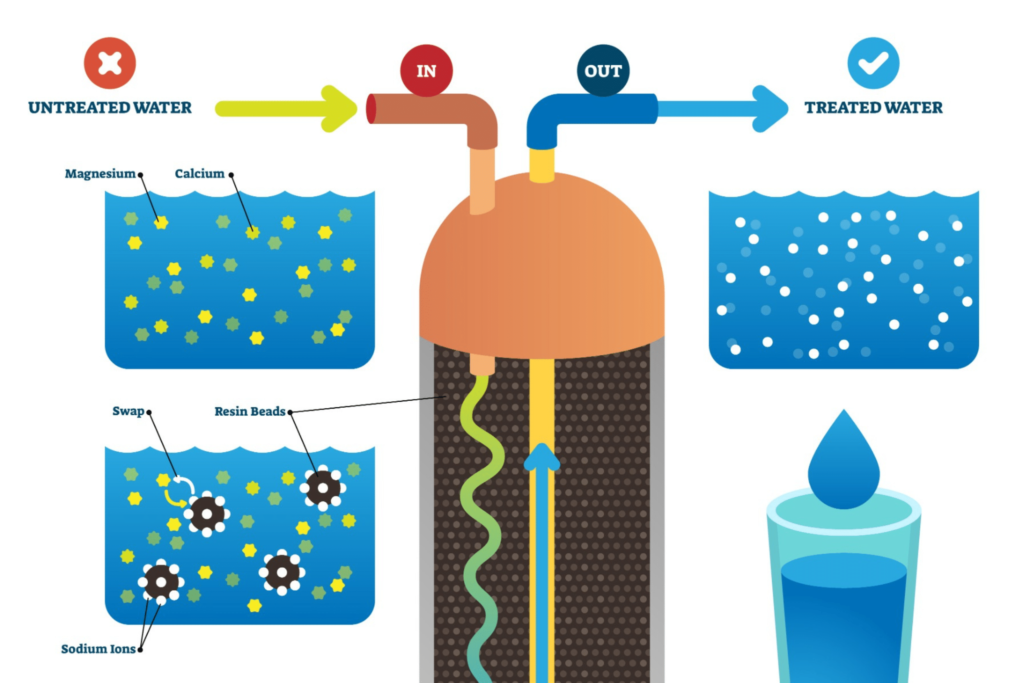
Salt-based water softeners rely on ion exchange to remove minerals that cause hardness. Water passes through a resin bed saturated with sodium (or sometimes potassium). Calcium and magnesium ions attach to the resin, while sodium ions replace them in the water. This process makes the water feel soft, reduces soap scum, prevents scale buildup in pipes, and keeps appliances running efficiently.
Key Pros and Cons of Salt-Based Softeners
| Feature | Pros | Cons |
| Water Softness | Completely softens water; reduces soap and detergent usage | Adds sodium to water; may affect taste |
| Plumbing Protection | Prevents scale and extends life of water-using appliances | Requires regular regeneration cycles; produces wastewater |
| Maintenance | Resin bed lasts 10,15 years; predictable upkeep | Needs frequent salt refills and brine tank cleaning |
| Environmental Impact | Reliable for all hardness levels | Brine discharge may affect local water systems; some areas restrict salt-based systems |
Example: A four-person household in Phoenix, AZ with hard water (12 gpg) will need a 32,000,40,000 grain water softener. Choosing a Culligan or EcoWater system ensures full softening, but expect weekly salt refills and occasional professional servicing.
How Saltless Water Softeners Work
Saltless systems, often referred to as water conditioners, do not remove hardness minerals. Instead, they use technologies such as Template Assisted Crystallization (TAC), electromagnetic fields, or polyphosphate filters to prevent minerals from sticking to surfaces and forming scale.
Key Pros and Cons of Saltless Softeners
| Feature | Pros | Cons |
| Maintenance | Almost maintenance-free; no salt refills | Does not remove hardness; water may feel “hard” |
| Environmental Impact | No brine discharge; eco-friendly | Less effective on extremely hard water |
| Installation | Compact and often DIY-friendly | Limited effectiveness in high-demand households |
| Long-Term Cost | No ongoing salt expense; fewer service calls | Higher upfront cost for premium models |
Example: A LifeSource or Aquasana TAC system for a medium-sized home can condition water for 3-5 years before media replacement is needed, making it ideal for families seeking a low-maintenance solution.
Salt vs Saltless Water Softener: Detailed Comparison
Understanding the practical differences between these systems helps homeowners weigh benefits against costs and maintenance.
1. Effectiveness at Removing Hardness
- Salt-Based: Removes all hardness minerals; ideal for very hard water (>10 gpg). Protects plumbing and appliances effectively.
- Saltless: Prevents scale without removing minerals; suitable for moderate hardness (3,10 gpg) or homes with municipal water.
2. Maintenance Requirements
- Salt-Based: Brine tank cleaning, salt refills, and occasional resin flushing. Resin typically lasts 10,15 years. Cost to service water softener averages $75,$150 per visit if using a professional.
- Saltless: Minimal maintenance; usually a media change every 3,5 years. No salt, no brine, no ongoing chemical use.
3. Water Quality and Taste
- Salt-Based: Water is softer, so soap lathers easier and dishes stay spot-free. Slightly higher sodium content may affect taste or be a concern for low-sodium diets.
- Saltless: Water retains all natural minerals; taste remains unchanged. Spotting on glassware may occur, but scale is reduced.
4. Environmental Impact
- Salt-Based: Produces brine discharge; some municipalities restrict or ban these systems.
- Saltless: Eco-friendly, no waste, retains healthy minerals.
Water Softener Installation Costs
Installation costs vary depending on system type, brand, and whether you hire a professional or opt for DIY.
| System Type | Professional Installation | DIY Installation | Notes |
| Salt-Based | $600,$1,500 | $300,$500 | Includes plumbing and setup; resin may need occasional maintenance |
| Saltless (TAC) | $1,000,$2,000 | $500,$800 | Often compact; media replacement may cost $200,$400 every 3,5 years |
| Dual-Tank Salt-Based | $2,000,$4,000 | Not recommended | Provides continuous soft water; ideal for well water or large homes |
Brand-Specific Costs:
- Culligan water softener installation cost: $1,800,$2,500
- Kinetico: $3,000,$4,500 (premium, low-maintenance)
- EcoWater: $1,500,$2,000 (budget-friendly, reliable)
- Puronics/Hague: $2,000,$3,500
Example: Installing a Culligan softener professionally in a 3-bathroom home averages $2,200, including initial salt supply and standard plumbing connections.
DIY vs Professional Installation
DIY Advantages:
- Lower upfront costs
- Flexible scheduling
- Good for compact saltless systems or portable salt-based units
DIY Disadvantages:
- Mistakes can lead to leaks or poor performance
- May void manufacturer warranty
- Complex systems like dual-tank softeners often require professional plumbing
Professional Advantages:
- Expert sizing and placement
- Warranty protection
- Proper resin regeneration setup and brine tank installation
When Is Upgrading a Water Softener Cost-Effective?
Upgrading makes sense if:
- Your current system is over 10,12 years old
- Resin is worn or water softness has decreased
- Maintenance costs are high, e.g., frequent service calls
- Water hardness exceeds your softener’s capacity
Example: If you spend $150 per year on salt, plus $100 on servicing, a modern saltless or high-efficiency salt-based unit could pay for itself in 3,5 years.
Hidden Costs to Consider
- Water Softener Salt vs Saltless Expenses:
Salt-based systems require ongoing salt purchases (~$5,$10 per 40 lb bag, 6,12 bags/year for a typical family). Saltless systems have a higher upfront cost but minimal ongoing expenses. - Maintenance:
Cost to service water softener: $75,$150 per visit
Filter replacement cost: $50,$200 depending on brand and media type
- Space and Plumbing:
Large tanks or dual-tank systems may require basement or utility room installation. Saltless units are compact, often hanging directly on pipes. - Water Usage Impact:
Salt-based softeners slightly increase water consumption due to regeneration cycles.
Real-Life Cost Comparison Example
| Scenario | Salt-Based Total Cost | Saltless Total Cost | Notes |
| Medium 4-person home | $1,800 unit + $2,000 installation + $120/year salt | $2,200 unit + $700 installation + $0/year | Over 10 years, total cost salt-based ~$5,000; saltless ~$2,900 |
| Very hard water well | $3,500 unit + $3,000 installation + $180/year salt | $3,200 unit + $800 installation + $0/year | Saltless may underperform on extreme hardness; dual-tank salt system preferred |
Common Mistakes and Misconceptions
- “Saltless softeners remove hardness.”
They don’t remove minerals; they condition water to prevent scale. - “Salt-based softeners are high maintenance.”
Proper setup and modern systems can minimize effort; weekly salt check is usually sufficient. - “All water softeners are eco-unfriendly.”
Saltless systems produce no wastewater, retain minerals, and avoid environmental concerns. - “DIY installation always saves money.”
Mistakes can double costs; professional installation may be worth the investment for larger systems.
Step-by-Step DIY Cost-Saving Tips
- Measure water hardness using a test kit before buying a system.
- Calculate household water usage to select proper capacity (grains per day).
- Choose compact saltless units if minimal space is available.
- Compare local salt prices to estimate long-term cost for salt-based systems.
- Check for utility rebates or local incentives on water-efficient units.
- Install a bypass valve to avoid softening water for outdoor irrigation.
- Use high-quality salt (solar or evaporated) to reduce bridging in brine tanks.
FAQs About Salt vs Saltless Water Softeners
1. Is a salt-free system a true water softener?
Technically no, it’s a conditioner. It prevents scale but does not remove calcium or magnesium.
2. Can I drink water from a salt-based softener?
Yes, but sodium content may slightly increase. People on low-sodium diets can opt for potassium chloride instead.
3. Do saltless systems work on very hard well water?
Effectiveness decreases with extreme hardness. A salt-based or dual-tank system is more reliable.
4. How often should I check my salt-based system?
Every 4,6 weeks; refill salt and break up salt bridges as needed.
5. What is the average cost to rent a water softener?
$15,$50/month depending on system type, brand, and rental terms.
6. How much does it cost to service a water softener?
Typically $75,$150 per visit; includes inspection, resin cleaning, and brine tank check.
7. What is the water softener filter replacement cost?
$50,$200 per replacement, depending on system size and brand.
8. Does a saltless system reduce soap usage?
Not significantly. Water feels harder, so more soap may be needed, though scale is reduced.
9. Which is better for appliances?
Salt-based softeners protect better against scale buildup; saltless systems prevent visible buildup but leave minerals in water.
10. When is upgrading a water softener cost-effective?
When maintenance costs, water hardness, or declining performance make replacement cheaper over time.
Final Thoughts: Salt vs Saltless Water Softener
Choosing between a salt vs saltless water softener depends on your water hardness, lifestyle, and budget:
- Salt-Based: Best for very hard water, heavy appliance protection, and a traditional soft water feel. Requires regular maintenance and produces brine waste.
- Saltless: Ideal for moderate hardness, eco-conscious homeowners, and those seeking low-maintenance systems. Higher upfront cost but minimal long-term expense.
For most US households, a saltless system provides convenience and sustainability, while salt-based softeners are the go-to for households with extreme hardness or well water. Evaluating long-term costs, maintenance, and your household needs ensures the right system for your home.For detailed brand comparisons, installation cost estimates, and DIY tips, check Water Softener Installation Costs and Water Softener Maintenance Costs.