
A salt-based water softener and a salt-free water conditioner are designed to address hard water, but they work in fundamentally different ways. A traditional salt-based system removes calcium and magnesium through ion exchange, helping prevent mineral deposits, improving soap performance, and producing genuinely softened water. A salt-free system generally conditions water to reduce mineral scale formation without removing the hardness minerals themselves.
For most households dealing with significant hard water, a traditional salt-based softener is the better choice when the goal is to remove hardness, reduce soap residue, and achieve the familiar benefits of soft water. Salt-free systems may be a better fit for homeowners who want to reduce scale buildup, avoid salt replenishment, and maintain the mineral content of their water without installing a conventional ion-exchange softener.
The right choice depends on your water hardness, plumbing conditions, household priorities, maintenance expectations, budget, and whether you actually need softened water or simply want to reduce scale.
Salt vs Salt-Free Water Softener: What’s the Difference?
The biggest difference between salt-based and salt-free water treatment systems is what they do to the minerals responsible for hard water.
A salt-based water softener uses a process called ion exchange. As water passes through a tank containing resin beads, calcium and magnesium ions are exchanged for sodium or potassium ions. The minerals responsible for hardness are therefore removed from the treated water.
A salt-free water conditioner typically uses a technology designed to change how hardness minerals behave or form scale. Depending on the technology, minerals may remain in the water but become less likely to attach to plumbing surfaces and form deposits.
This distinction matters because reducing scale is not the same as removing hardness.
| Feature | Salt-Based Water Softener | Salt-Free Water Conditioner |
| Primary treatment | Ion exchange | Scale conditioning |
| Removes calcium and magnesium | Yes, through ion exchange | Generally no |
| Produces genuinely softened water | Yes | No |
| Uses salt | Usually sodium chloride or potassium chloride | No salt for conditioning |
| Requires regeneration | Yes, in conventional systems | Usually no salt-based regeneration |
| Helps prevent scale | Yes, by removing hardness minerals | Designed to reduce scale formation |
| Soap lather improvement | Typically noticeable | Generally less noticeable |
| White mineral spots | Significantly reduced in many applications | May still occur |
| Maintenance | Salt replenishment and periodic service | Usually lower routine maintenance |
| Wastewater during regeneration | Usually yes | Generally no regeneration wastewater |
| Best suited for | Households wanting actual soft water | Households prioritizing scale reduction without salt |
Although both products are often marketed as water softeners, their treatment results are not interchangeable.
A homeowner comparing salt free water softener vs salt water softener options should first decide whether the goal is to remove hardness minerals or reduce the problems those minerals create.
How Does a Salt-Based Water Softener Work?
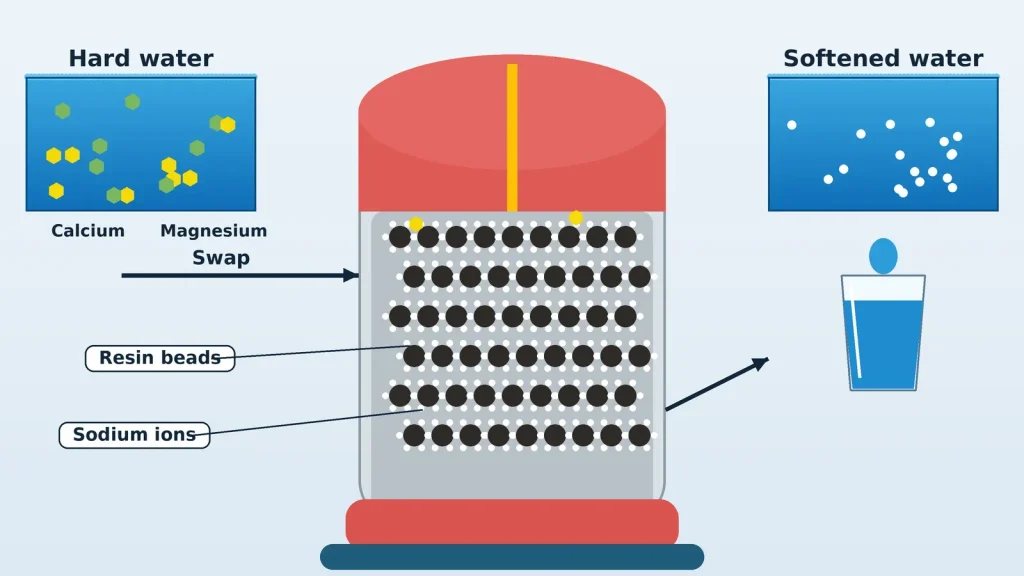
A salt-based water softener treats hard water using an ion-exchange resin bed. This process removes calcium and magnesium, which are the primary minerals responsible for water hardness.
Unlike a salt-free conditioner, a conventional softener changes the mineral composition of the treated water.
The Ion-Exchange Process
When hard water enters the softener, it passes through a tank containing thousands of small resin beads. These beads carry ions that can exchange with hardness minerals in the water.
As water flows through the resin:
- Calcium and magnesium attach to the resin beads.
- Sodium or potassium ions are released into the water.
- The hardness minerals are captured inside the resin bed.
- The treated water exits the system with significantly reduced hardness.
This is why salt-based softeners can produce water that measures much lower in hardness than the incoming supply.
Why Does the System Need Salt?
The resin eventually becomes saturated with calcium and magnesium. Once its exchange capacity is used, the system needs to regenerate the resin so it can continue treating water.
Salt is used to create a concentrated brine solution. During regeneration, the brine passes through the resin and reverses the ion-exchange process, displacing the accumulated hardness minerals.
The system then flushes the minerals and excess brine into the drain before returning to service.
Salt is therefore not simply added to the household water. It is primarily used to restore the resin’s ability to remove hardness.
What Does Salt-Based Softening Actually Improve?
Because calcium and magnesium are removed, salt-based softening can provide several noticeable household benefits:
- Reduced mineral scale on showerheads, faucets, and fixtures
- Less mineral buildup inside water-using appliances
- Better soap and detergent performance
- Less soap scum on shower surfaces
- Reduced spotting on glassware
- Easier cleaning in many bathrooms
- Less hardness-related buildup in plumbing and water heaters
The results are particularly noticeable in homes with moderately hard or very hard water.
However, softened water is not automatically safe for every use or every person. The added sodium depends partly on the original hardness of the water. Households with sodium-related dietary restrictions may need to consider alternative arrangements for drinking water.
How Does a Salt-Free Water Conditioner Work?
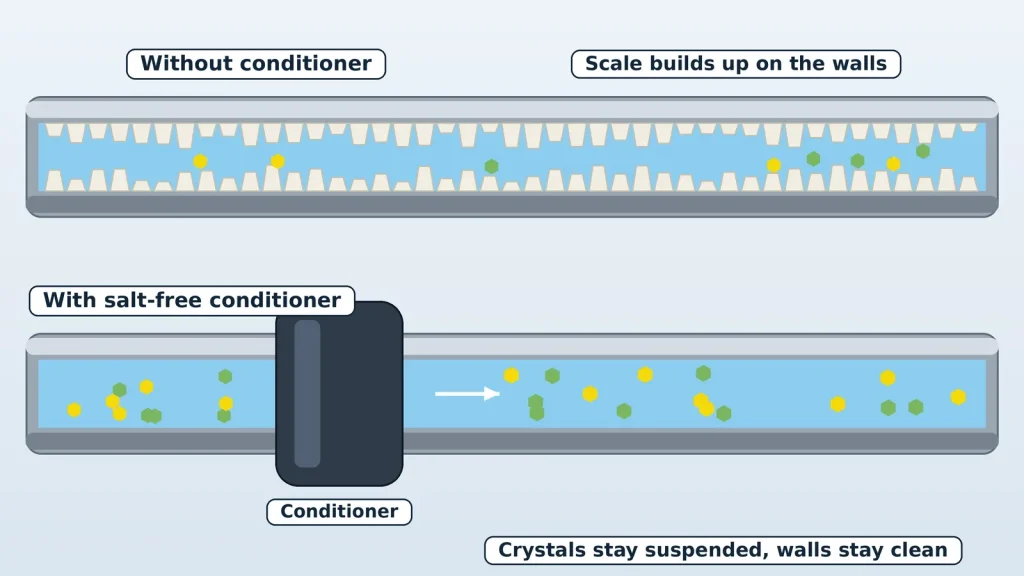
A salt-free water conditioner is designed to reduce the tendency of hardness minerals to form scale on plumbing surfaces, heating elements, fixtures, and appliances. Unlike a traditional water softener, it generally does not remove calcium and magnesium from the water.
Many salt-free systems use a technology called Template Assisted Crystallization (TAC), although other conditioning technologies are available.
Template Assisted Crystallization (TAC)
TAC systems use specialized media that encourage dissolved hardness minerals to form microscopic crystals. These crystals remain suspended in the water instead of readily attaching to surfaces and forming hard mineral deposits.
The water still contains calcium and magnesium. The treatment is intended to change how these minerals behave under conditions that would otherwise encourage scale formation.
Does Salt-Free Conditioning Remove Hardness?
Generally, no.
A salt-free conditioner may help reduce scale formation, but it does not provide the same mineral-removal results as a conventional ion-exchange softener.
This means you may still notice:
- Mineral spots on dishes and glassware
- Hard water readings on a test kit
- Soap that does not lather as readily as it would with softened water
- Some mineral residue on surfaces
- Calcium and magnesium remaining in the water
The effectiveness of scale conditioning depends on the particular technology and water conditions. Not every salt-free product performs equally, and some systems have limitations involving water chemistry, temperature, or the amount of hardness they can handle.
Why Do Homeowners Choose Salt-Free Systems?
Salt-free systems appeal to people who want to address mineral scale without maintaining a brine tank.
Depending on the system, they may offer:
- No regular salt purchases
- No salt-based regeneration cycle
- Reduced regeneration wastewater
- Less routine maintenance
- Retention of calcium and magnesium in treated water
- A relatively compact installation
For homeowners who mainly want to reduce scale in pipes, appliances, and heating equipment, a conditioner may provide an attractive alternative.
However, if the main concern is the feel of hard water, soap performance, or mineral residue on surfaces, a salt-free conditioner may not provide the same results as a salt-based softener.
Salt-Based vs Salt-Free Water Softener: Pros and Cons
Neither system is automatically better for every household. The main advantages of each depend on the type of water problem you are trying to solve.
Salt-Based Water Softener Pros
1. Removes hardness minerals
The biggest advantage is actual hardness removal. Ion exchange reduces calcium and magnesium concentrations, which helps prevent mineral deposits from forming.
2. Better soap and detergent performance
Softened water generally allows soap to lather more readily. Many homeowners notice that they need less soap, shampoo, and detergent for certain cleaning tasks.
3. Reduces mineral residue
Because hardness minerals are removed, softened water typically leaves fewer calcium and magnesium deposits on shower doors, faucets, and glassware.
4. Protects water-using equipment from hardness buildup
Water heaters, dishwashers, washing machines, and other equipment can benefit from reduced hardness-related scale accumulation.
5. Suitable for very hard water
A properly sized salt-based system can handle substantial hardness levels when configured correctly for the incoming water and household demand.
Salt-Based Water Softener Cons
1. Requires salt replenishment
Homeowners need to monitor the brine tank and periodically add salt. Consumption depends on water hardness, system capacity, regeneration settings, and household usage.
2. Requires periodic maintenance
The brine tank, resin, control valve, and other components may need maintenance over time.
3. Uses water during regeneration
Traditional systems discharge regeneration wastewater containing the minerals removed from the resin and the spent brine.
4. Adds sodium or potassium to treated water
The ion-exchange process adds sodium or potassium depending on the regeneration salt used. The amount added varies according to the original hardness.
5. Requires suitable plumbing and space
A conventional softener generally needs a location for the resin tank, brine tank, drain connection, and plumbing connections.
Salt-Free Water Conditioner Pros
1. No salt replenishment
Most salt-free conditioners do not require regular salt purchases or a brine tank.
2. Less routine maintenance
Many systems require little more than periodic inspection and eventual media replacement, although maintenance requirements vary.
3. No conventional regeneration wastewater
Salt-free conditioning generally does not involve the same regeneration and brine discharge as traditional softeners.
4. Retains calcium and magnesium
The minerals remain in the water, which may appeal to homeowners who prefer not to change the mineral composition through ion exchange.
5. Convenient for scale-focused treatment
A salt-free conditioner can be suitable when the primary goal is protecting plumbing and equipment from scale rather than achieving zero or near-zero hardness.
Salt-Free Water Conditioner Cons
1. Does not actually soften water
The system generally does not remove calcium and magnesium. Water hardness measurements will therefore remain elevated.
2. Soap performance may not improve as much
Homeowners who struggle with soap scum, poor lather, or the feel of hard water may not experience the same improvements as with a salt-based system.
3. Mineral spots may remain
Because minerals remain in the water, visible residue on glass, fixtures, and dishes may still occur.
4. Performance depends on water conditions
Certain conditioner technologies have specific operating limitations. High hardness, unusual water chemistry, or other contaminants may affect performance.
5. Media replacement may still be required
Salt-free systems do not necessarily mean maintenance-free systems. Some conditioners require replacement media after a certain period or volume of treated water.
Salt Free vs Salt Water Softener: Which Performs Better?
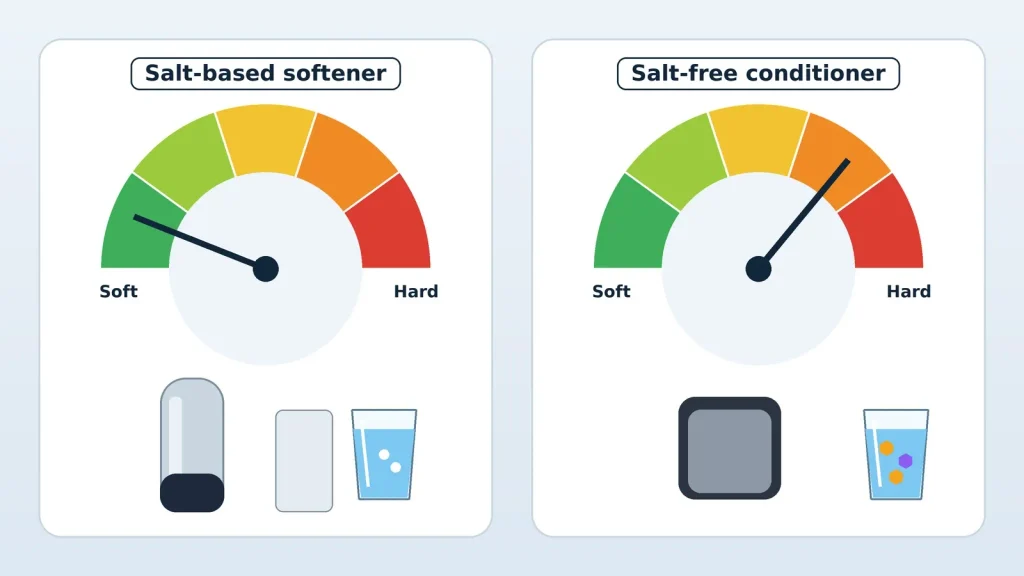
If performance means removing calcium and magnesium, a salt-based softener performs better because it is specifically designed to reduce water hardness.
If performance means reducing scale formation without removing hardness minerals, a salt-free conditioner may be a suitable option, depending on the technology and water chemistry.
The distinction is especially important when comparing marketing claims. A conditioner that reduces scale is not necessarily producing soft water.
| Household problem | Salt-based softener | Salt-free conditioner |
| High water hardness | Strong solution | Does not remove hardness |
| Scale inside plumbing | Very effective when correctly sized | May reduce scale formation |
| Soap scum | Typically reduces it substantially | Results may be limited |
| Hard water spots | Typically reduces them | Spots may remain |
| Poor soap lather | Usually improves it | May not significantly improve it |
| Mineral buildup in water heater | Helps prevent hardness scale | May reduce scale depending on technology |
| Salt maintenance | Required | Not required |
| Sodium addition | Usually adds sodium | Generally does not use sodium-based ion exchange |
For households with severe hardness problems, a traditional softener is often the more complete solution. For homes with moderate hardness and a specific scale-prevention objective, a salt-free conditioner may be sufficient.
Salt-Based vs Salt-Free Systems: Cost Comparison
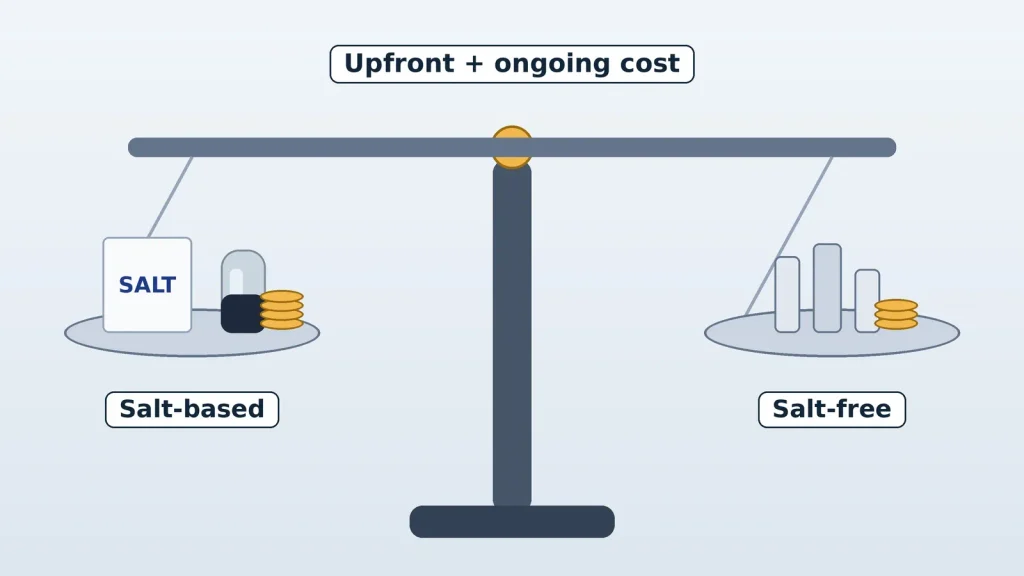
The purchase price is only one part of the cost of a water treatment system. Installation, maintenance, replacement parts, salt consumption, and operating costs can affect the total expense over several years.
Salt-based systems generally have recurring salt and maintenance costs. Salt-free conditioners typically avoid salt purchases but may require replacement media or periodic servicing.
The actual cost depends on the brand, capacity, water conditions, installation requirements, and whether the system is professionally installed.
Which System Is Cheaper to Maintain?
Salt-free conditioners often have lower routine maintenance requirements because they do not require salt replenishment or conventional regeneration.
However, a salt-based softener may offer greater value to a household that genuinely needs softened water. Spending less on maintenance does not necessarily mean spending less overall if the system does not adequately address the household’s water problems.
Before comparing prices, consider what you are paying the system to accomplish:
- Remove hardness minerals?
- Reduce scale buildup?
- Improve soap performance?
- Protect a water heater?
- Reduce mineral residue?
- Minimize ongoing maintenance?
A system that meets your primary needs is generally a better investment than one selected solely because its maintenance costs are lower.
Which Is Better for Drinking Water?
The better system for drinking water depends on your water source, existing mineral levels, household preferences, and whether you want hardness removed.
A salt-based softener reduces calcium and magnesium through ion exchange, but it introduces sodium into the treated water. A salt-free conditioner generally leaves the original hardness minerals in the water while attempting to reduce scale formation.
Neither system should be treated as a complete drinking-water purification solution. They are primarily designed to address hardness or scale, not necessarily bacteria, viruses, lead, arsenic, nitrates, or other contaminants.
Drinking Water From a Salt-Based Softener
Softened water is commonly used throughout the home, but some households prefer an untreated or separately filtered drinking-water supply.
The sodium added during softening depends on the original hardness. For example, water with higher calcium and magnesium concentrations generally results in more sodium being introduced during ion exchange.
If you are monitoring sodium intake for medical reasons, consult your healthcare professional about your drinking-water arrangements. A separate drinking-water tap supplied before the softener, or a suitable drinking-water treatment system, may be considered depending on your plumbing and water quality.
Drinking Water From a Salt-Free Conditioner
A salt-free conditioner generally retains the calcium and magnesium already present in the water. This may appeal to homeowners who want to avoid the sodium addition associated with conventional softening.
However, retaining minerals does not automatically make the water healthier or safer. Water quality depends on the source and the contaminants present, not simply whether it contains minerals.
If drinking-water quality is your primary concern, test the water and select a treatment system based on the specific contaminants identified.
Which System Is Better for Showers and Bathing?
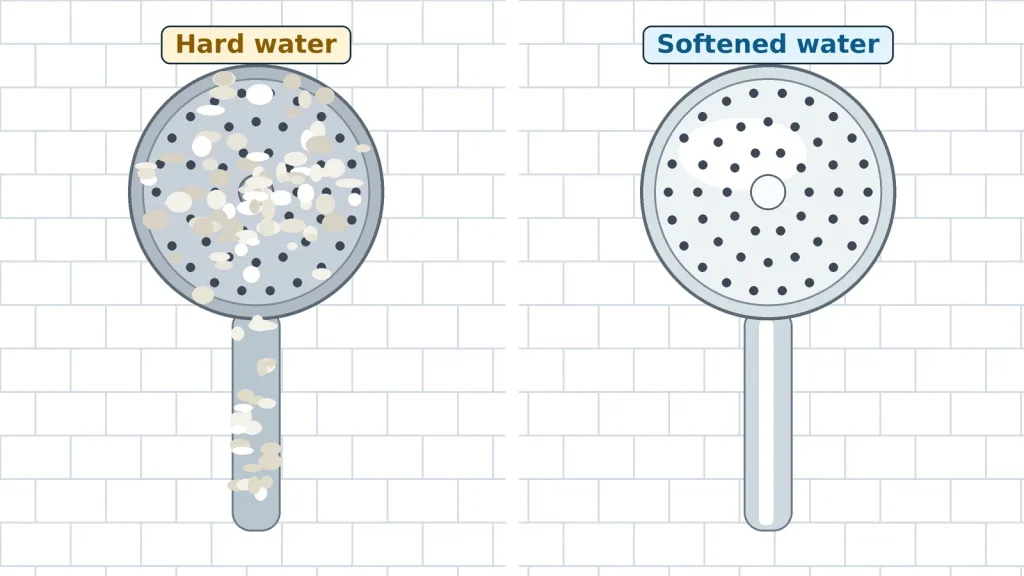
For showering and bathing, a salt-based softener usually provides more noticeable results when the water is genuinely hard.
Softened water often feels different because it contains substantially less calcium and magnesium. Soap and shampoo can lather more readily, and mineral soap scum is generally reduced.
Benefits of Salt-Based Softening in Bathrooms
Homeowners may notice:
- Less soap scum on shower walls
- Easier cleaning of glass shower doors
- Reduced mineral deposits around faucets
- Better soap lather
- Less residue on tubs and fixtures
- Reduced hardness-related buildup in showerheads
These benefits can be especially useful in areas with very hard water.
What to Expect From a Salt-Free Conditioner
A salt-free conditioner may help reduce scale formation on plumbing and shower fixtures, but the water still contains hardness minerals.
You may therefore continue to experience some mineral spots, soap residue, or differences in soap performance.
If your main frustration is the way hard water feels during bathing, a salt-based softener is usually the more suitable choice.
Which System Is Better for Laundry?
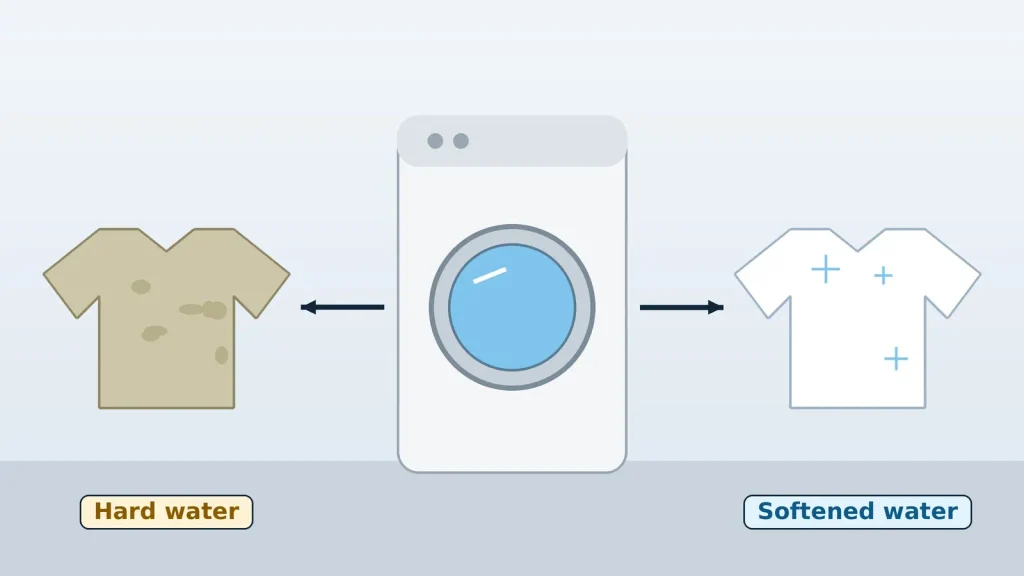
Salt-based softeners generally offer greater benefits for laundry because they remove hardness minerals that interfere with soap and detergent performance.
Hard water can make cleaning products less effective and contribute to mineral residue on fabrics. When water hardness is reduced, detergent performance may improve, and some households find that they can use less detergent.
Salt-Based Softener for Washing Clothes
Potential benefits include:
- Better detergent performance
- Less mineral residue on fabrics
- Reduced hardness-related buildup in washing machines
- Easier rinsing in some circumstances
- Better performance when using detergents formulated for softened water
The actual results depend on the detergent, water hardness, washing machine, fabric type, and wash settings.
Salt-Free Conditioner for Laundry
A salt-free conditioner may help reduce scale formation inside washing equipment, but because it does not remove hardness minerals, it generally does not provide the same detergent-performance benefits.
If your primary concern is laundry quality, particularly in a home with very hard water, salt-based softening is usually the stronger option.
Which System Is Better for Dishwashers?
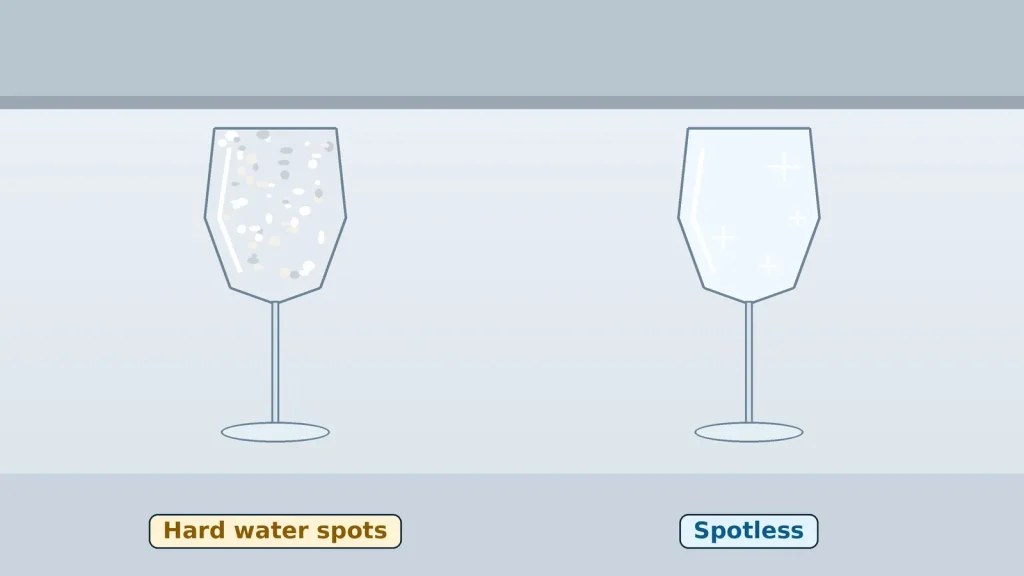
Dishwashers are another area where the difference between actual softening and scale conditioning matters.
Hard water can contribute to spots, mineral films, and buildup inside the dishwasher. Traditional salt-based softening removes hardness minerals and can significantly reduce these problems.
Salt-free conditioners may reduce scale formation in some applications, but minerals remain in the water and can still contribute to visible deposits.
| Dishwasher concern | Salt-based system | Salt-free conditioner |
| Hardness reduction | Yes | Generally no |
| Mineral spotting | Usually reduced | May continue |
| Scale buildup | Reduced substantially | May be reduced depending on technology |
| Detergent performance | Usually improved | Not equivalent to softened water |
| Routine system maintenance | Salt replenishment | Media servicing may be required |
If your dishwasher consistently leaves white spots on glassware, check the water hardness and dishwasher settings before buying a whole-house treatment system. Sometimes the dishwasher’s built-in salt system, rinse aid, or detergent selection also affects results.
Which System Is Better for Water Heaters?
Both systems may help reduce scale-related problems in water heaters, but their mechanisms are different.
A salt-based softener removes calcium and magnesium before the water reaches the heater. This reduces the amount of hardness minerals available to form scale.
A salt-free conditioner attempts to reduce the tendency of those minerals to form hard deposits. The effectiveness depends on the particular conditioning technology and operating conditions.
Why Water Heater Scale Matters
Mineral deposits can accumulate on heating surfaces and inside plumbing connections. Depending on the heater design and severity of buildup, scale can contribute to reduced heat transfer, maintenance needs, and reduced equipment performance.
In hard-water areas, a correctly installed and maintained treatment system may help limit these problems.
However, no water treatment system eliminates every type of water heater maintenance. Sediment, corrosion, other water chemistry issues, and manufacturer maintenance requirements still matter.
For homeowners comparing protection methods, the choice between a salt-based softener and salt-free conditioner should be based on the actual hardness level and the equipment manufacturer’s recommendations.
Salt-Free vs Salt-Based Water Softener for Very Hard Water
When the incoming water is very hard, a salt-based softener is generally the more reliable option for households that want a significant reduction in hardness.
The reason is straightforward: a conventional ion-exchange softener is designed to remove calcium and magnesium. A salt-free conditioner generally does not remove these minerals, even when it performs well at reducing scale formation.
What Happens When Water Hardness Is High?
High hardness can contribute to:
- Heavy scale deposits on faucets and showerheads
- Mineral buildup inside water heaters
- White residue on glassware
- Soap scum in bathrooms
- Reduced detergent performance
- More frequent cleaning of affected surfaces
A properly sized salt-based system can address the underlying hardness by removing calcium and magnesium.
A salt-free system may be suitable for homeowners primarily concerned with scale prevention, but its performance should be evaluated against the manufacturer’s operating limits and the actual water chemistry.
Should You Choose a Salt-Free System for Extremely Hard Water?
Do not assume that every salt-free conditioner can handle extremely hard water equally well.
Before purchasing, confirm:
- The manufacturer’s maximum hardness recommendation
- Whether the system has specific water chemistry requirements
- Whether pretreatment is required
- The expected scale-reduction performance
- Media lifespan and replacement requirements
- Whether the manufacturer offers performance testing or a warranty
If your water hardness is high and you want softer water for bathing, cleaning, laundry, and appliances, a salt-based system is generally the more appropriate starting point.
Environmental Impact: Salt-Based vs Salt-Free Systems
Environmental considerations can influence the choice, particularly for homeowners concerned about water use, wastewater discharge, or salt entering the environment.
Salt-Based Softener Environmental Considerations
Traditional water softeners use water during regeneration and discharge wastewater containing the minerals removed from the resin and the regeneration brine.
Depending on the system, household water consumption, and regeneration settings, this can contribute to water usage and salt discharge.
Some municipalities have restrictions or guidance concerning water softener discharge, particularly in areas where wastewater salinity is a concern. Check local regulations before installing a new system.
Modern high-efficiency softeners may use metered regeneration, optimized salt dosage, or other features designed to reduce unnecessary salt and water use.
Salt-Free Conditioner Environmental Considerations
Salt-free conditioners generally do not require conventional salt-based regeneration. This means they typically avoid the brine wastewater associated with traditional softeners.
However, environmental performance also depends on the system’s manufacturing, media lifespan, replacement requirements, and the water and energy savings it may provide through reduced scale formation.
A salt-free system is not automatically environmentally superior in every situation, but avoiding regular salt use and wastewater regeneration may be an advantage for some households.
Installation Requirements: Salt vs Salt-Free Water Treatment
Installation requirements differ depending on the type of equipment and your home’s plumbing.
Salt-Based System Installation
A traditional softener typically needs:
- A suitable location for the resin tank
- Space for the brine tank
- A connection to the main water supply
- A drain for regeneration wastewater
- Electrical power if the control system requires it
- A bypass valve for maintenance
Installation may become more complicated when plumbing needs to be modified, a drain is unavailable, or the equipment must be installed in a confined area.
Salt-Free System Installation
Many salt-free conditioners have a simpler installation footprint because they do not need a brine tank.
Depending on the system, installation may require:
- A suitable location on the main water line
- Correct flow capacity
- Appropriate pipe connections
- A bypass arrangement
- Pretreatment where required
Some salt-free systems may need additional filtration if the incoming water contains sediment, chlorine, iron, or other substances that could affect the conditioning media.
Neither system should be installed without checking the manufacturer’s requirements, plumbing code, and water conditions.
Salt-Based vs Salt-Free Water Softener Cost Over Time
Comparing the purchase price alone can be misleading. The total cost of ownership includes installation, maintenance, replacement parts, salt or conditioning media, and the expected lifespan of the equipment.
Salt-Based System Long-Term Costs
Common expenses include:
- Initial equipment purchase
- Professional installation
- Salt replenishment
- Electricity where applicable
- Regeneration water
- Periodic service
- Resin or component replacement when needed
A properly maintained system can provide years of service, but its long-term cost depends on usage and water conditions.
Salt-Free System Long-Term Costs
Common expenses may include:
- Initial equipment purchase
- Installation
- Periodic servicing
- Conditioning media replacement
- Pretreatment filters, where required
- Replacement components
Although salt-free conditioners may have fewer routine maintenance tasks, media replacement can still represent a significant long-term expense depending on the product.
When comparing different systems, consider both the initial price and the maintenance costs over the expected service life.
For example, branded systems may have different pricing structures, service packages, and installation arrangements. Comparing the culligan water softener monthly cost, kinetico water softener cost, and ecowater water softener price can help homeowners understand how equipment, servicing, and ownership arrangements differ between brands.
If you are considering renting instead of purchasing, compare the water softener rental cost per month with the estimated total cost of owning and maintaining a system over several years.
The best financial choice is not necessarily the system with the lowest purchase price. It is the one that provides the treatment you actually need at a reasonable long-term cost.
Common Mistakes When Choosing Between Salt and Salt-Free Systems
Homeowners can end up with the wrong system when they focus on marketing claims instead of water test results and treatment goals.
1. Assuming Salt-Free Means Soft Water
A salt-free conditioner generally does not remove hardness minerals.
If you expect noticeably softer water, improved soap lather, and reduced mineral spots, verify that the product actually removes hardness rather than only conditioning it.
2. Buying Without Testing Water Hardness
Water hardness varies significantly between locations and water sources.
A water test can help establish whether you have moderately hard, hard, or very hard water and whether a conventional softener is appropriate.
If your water also contains iron, manganese, sediment, or other contaminants, those factors may influence system selection.
3. Comparing Systems Only by Price
A cheaper conditioner may not solve the same problems as a conventional softener.
Compare treatment results, installation requirements, maintenance, expected lifespan, warranty, and operating costs rather than choosing solely on the purchase price.
4. Ignoring Household Water Demand
A system must be appropriately sized for the household.
A softener that is too small may regenerate frequently, while an oversized system may not be the most efficient choice for the household’s actual needs.
Consider the number of occupants, daily water usage, incoming hardness, and peak flow requirements.
5. Expecting Salt-Free Conditioning to Eliminate All Mineral Spots
Because calcium and magnesium generally remain in conditioned water, some mineral residue may still occur.
If your goal is spotless glassware, reduced soap scum, and noticeably softer water, a salt-based system may better match your expectations.
6. Forgetting Maintenance and Replacement
Salt-based systems need salt and periodic inspection. Salt-free systems may require replacement media or filters.
Ask the installer what routine maintenance is required, what parts are replaceable, and how much servicing is likely to cost over the equipment’s expected lifespan.
Which Water Treatment System Should You Choose?
The best system depends on what you want to improve in your home.
Choose a Salt-Based Water Softener If:
- Your water has high calcium and magnesium levels.
- You want genuinely softened water.
- Soap and shampoo do not lather well.
- You struggle with soap scum and mineral deposits.
- You want to reduce hardness-related buildup in appliances.
- You want better detergent performance for laundry and cleaning.
- You are comfortable maintaining a brine tank and purchasing salt.
For most households with significant hard water, a conventional softener is the more complete treatment option.
Choose a Salt-Free Conditioner If:
- Your primary concern is reducing scale formation.
- You do not want to purchase or store water softener salt.
- You prefer a system without conventional regeneration wastewater.
- You want calcium and magnesium to remain in the water.
- Your water conditions are suitable for the conditioning technology.
- You understand that the water will generally remain hard.
A salt-free conditioner can be a practical choice when scale prevention is the main objective and actual hardness removal is not essential.
Can You Use Both a Salt-Based Softener and a Salt-Free Conditioner?
In some water treatment applications, homeowners may use multiple treatment technologies, but installing both is not automatically necessary.
A conventional softener already removes hardness minerals, which significantly reduces the mineral scale potential associated with calcium and magnesium.
A salt-free conditioner installed after a softener may provide little additional benefit for hardness-related scale, depending on the technology and the water conditions.
There may be specialized applications where multiple treatment stages are appropriate, but they should be selected based on a water analysis and a clear treatment objective.
Avoid purchasing multiple systems simply because a salesperson claims that each provides a different benefit. Ask what measurable improvement each system is expected to deliver.
Frequently Asked Questions
Is a salt-free water softener better than a salt water softener?
A salt-free conditioner may be better for homeowners who want to reduce scale formation without maintaining a brine tank. However, a salt-based softener is generally better when the goal is to remove calcium and magnesium, improve soap performance, and produce genuinely softened water.
The best choice depends on your water hardness and household needs.
Does salt-free water treatment actually soften water?
Generally, no. Most salt-free conditioners are designed to reduce scale formation rather than remove hardness minerals. Calcium and magnesium typically remain in the treated water, so a hardness test will still show hardness.
Which system removes calcium and magnesium?
A conventional salt-based softener removes calcium and magnesium through ion exchange. Most salt-free conditioners do not remove these minerals.
Is salt-free conditioning better for the environment?
Salt-free conditioners generally avoid conventional regeneration wastewater and routine salt use. This may be beneficial in areas where water use or salt discharge is a concern.
However, environmental impact depends on the system, media replacement, water conditions, and local wastewater regulations.
Does a salt-based water softener make water unhealthy?
A conventional softener adds sodium during ion exchange, with the amount depending on the original hardness. Softened water is commonly used in households, but people who need to limit sodium should discuss their drinking-water options with a healthcare professional.
A separate drinking-water supply may be appropriate depending on individual circumstances.
Will a salt-free conditioner prevent all scale?
No. Performance varies by technology and water chemistry. A conditioner may reduce scale formation, but it does not guarantee that mineral deposits will disappear completely.
Follow the manufacturer’s hardness limits and treatment recommendations.
Which system is cheaper in the long run?
Salt-free systems may have lower routine maintenance costs because they do not require salt replenishment or conventional regeneration.
Salt-based systems have ongoing salt and regeneration costs, but they provide actual hardness removal. The long-term value depends on which treatment benefits your household needs.
How long do salt-based and salt-free systems last?
Lifespan depends on the model, water conditions, maintenance, and usage.
Salt-based softeners may require resin replacement or component repairs over time. Salt-free conditioners may require media replacement, depending on the design.
Before purchasing, ask about expected lifespan, warranty coverage, and replacement costs.
Can I switch from a salt-based softener to a salt-free conditioner?
Yes, in many homes a salt-free conditioner can replace an existing softener, but the plumbing and system requirements should be evaluated first.
You should also consider whether you will be satisfied with water that still contains hardness minerals. If you have relied on softened water for bathing, laundry, and cleaning, the difference may be noticeable.
Does a salt-free system need electricity?
Many salt-free conditioners do not require electricity because they have no conventional regeneration cycle or powered control valve.
However, requirements depend on the specific product. Check the manufacturer’s specifications before installation.
Is salt-free water treatment worth it?
It can be worth it when the primary goal is scale reduction and the homeowner prefers lower routine maintenance.
It may not be worth it if you expect the same results as a conventional softener, particularly improved soap lather, reduced mineral residue, and actual hardness removal.
Final Verdict: Salt vs Salt-Free Water Softener
When comparing a salt vs salt-free water softener, the biggest factor is whether you want to remove hardness minerals or simply reduce the problems caused by those minerals.
A traditional salt-based softener is generally the better choice for households dealing with very hard water, soap scum, mineral spots, poor detergent performance, and hardness-related appliance buildup. Its ion-exchange process removes calcium and magnesium, providing the benefits most homeowners associate with soft water.
A salt-free conditioner may be a better choice for homeowners who mainly want to reduce scale formation, avoid regular salt purchases, minimize maintenance, and retain the minerals in their water. However, it should not be expected to produce the same results as an actual softener.
Before investing in either system, test your water hardness, identify your biggest household problems, and compare the equipment’s performance with your expectations.
If you are considering a salt-free system, research the upfront cost of salt-free water softener system alongside its media replacement and maintenance requirements. If you are considering a conventional softener, also factor in installation, salt consumption, and potential future repairs.
For homeowners evaluating the long-term ownership costs of conventional systems, understanding the water softener resin replacement cost can help when comparing the expected lifespan and maintenance expenses of different units.
Installation prices also vary according to plumbing access, drainage, electrical requirements, and location. For example, homeowners researching local installation expenses can compare water softener installation cost san antonio to understand how installation conditions affect the overall project budget.
Ultimately, neither technology is universally superior. A salt-based softener is the stronger choice for actual hardness removal, while a salt-free conditioner may be the more convenient option for scale-focused treatment. Choosing according to your water test and household priorities will help you avoid paying for a system that does not deliver the results you expect.