How Saltless Water Softeners Work
Hard water affects millions of homes across the United States. Minerals like calcium and magnesium naturally dissolve into groundwater, creating buildup on plumbing fixtures, appliances, and water heaters. Many homeowners look for treatment systems that reduce this scaling without the maintenance of traditional salt-based units.
Saltless water softeners, often called water conditioners or descalers, approach the problem differently. Instead of removing hardness minerals, these systems change how those minerals behave in water. The conditioning process prevents calcium and magnesium from sticking to pipes and appliances, which helps reduce limescale buildup. Because the minerals remain in the water, hardness tests still show the same results, even though scaling problems can be reduced.
Understanding how saltless water softeners work helps homeowners decide whether this type of system fits their water quality, budget, and maintenance preferences.
What Is a Saltless Water Softener?
A saltless water softener is technically a water conditioning system, not a true water softener. Traditional softeners remove minerals from water using an ion exchange process, while salt-free systems change the structure of those minerals to reduce scale formation.
The difference may seem subtle, but it affects how the system performs.
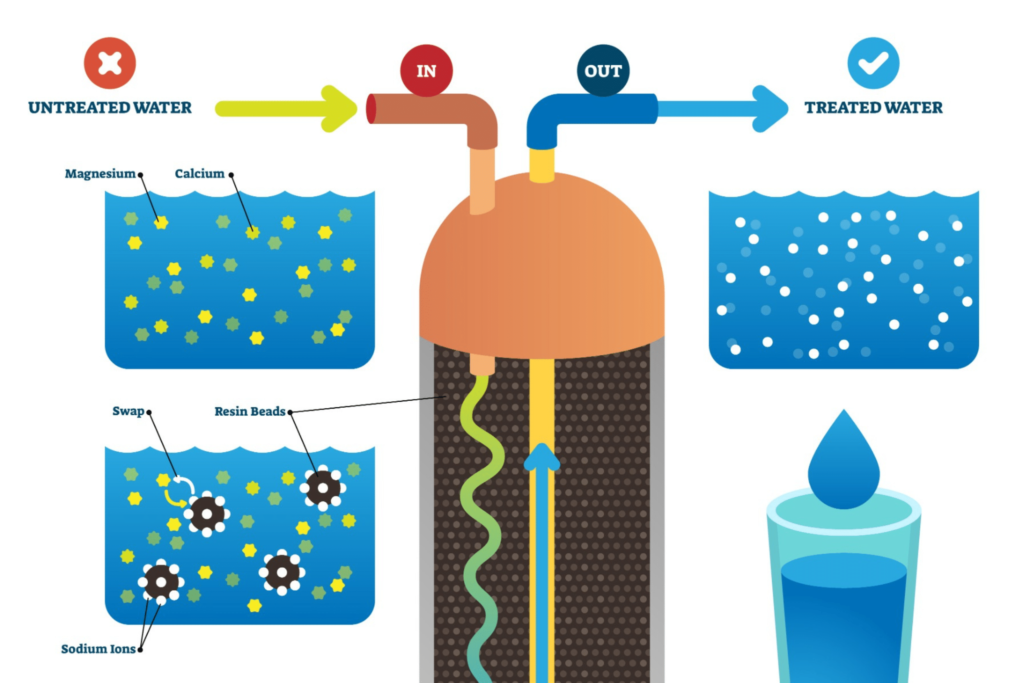
Salt-based softeners replace calcium and magnesium with sodium ions. Salt-free systems leave those minerals in the water and simply prevent them from attaching to surfaces like pipes, heating elements, and faucets.
Because the minerals stay in the water, many people prefer salt-free systems for drinking water taste and lower maintenance.
Key Characteristics of Saltless Water Softeners
Saltless systems usually have several defining features:
- No salt or brine tank
- No regeneration cycle
- Minimal maintenance
- Reduced limescale buildup
- Minerals remain in the water
These systems are often installed as whole-house conditioners where the main water line enters the home.
How Does a Saltless Water Softener Work?
The main principle behind saltless conditioning is changing the structure of hardness minerals so they cannot stick to surfaces.
The most common method is Template Assisted Crystallization (TAC). In this process, water flows through a special media that encourages dissolved calcium and magnesium to form microscopic crystals.
These crystals stay suspended in the water instead of bonding to plumbing surfaces.
The result is simple:
Minerals are still present, but they are less likely to create scale buildup.
Step-by-Step Process
Most saltless systems follow a simple treatment path:
1. Pre-filtration
Incoming water first passes through a sediment or carbon filter. This removes sand, rust particles, or debris that could interfere with the conditioning media.
2. Conditioning media
The water then flows through specialized media designed to trigger crystallization of hardness minerals.
3. Mineral crystallization
Calcium and magnesium ions form tiny crystals that remain suspended in the water.
4. Water distribution
Conditioned water moves through the plumbing system, carrying the minerals in crystal form instead of allowing them to attach to surfaces.
Because the minerals remain in the water, hardness readings typically stay the same.
Why Saltless Water Softeners Don’t Remove Minerals
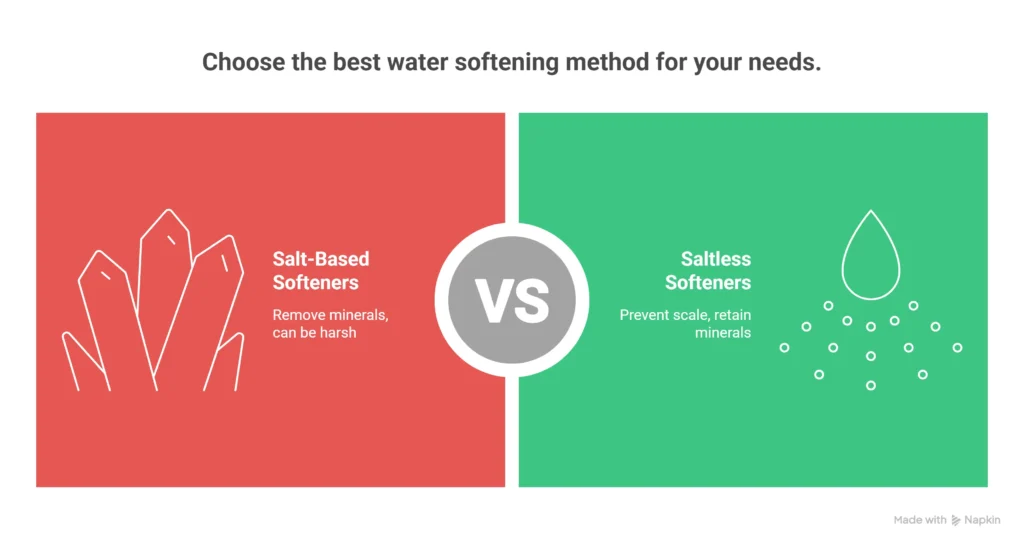
Many homeowners assume all water softeners remove hardness minerals. That assumption leads to confusion when learning how salt-free systems operate.
The reason is simple.
Saltless water softeners do not use ion exchange.
Traditional softeners rely on resin beads that capture calcium and magnesium ions and replace them with sodium. This process physically removes the hardness minerals from the water.
Salt-free conditioners skip that step entirely.
Instead of removing minerals, they modify their physical structure.
The Key Difference
| Feature | Salt-Based Softener | Saltless Conditioner |
| Mineral removal | Yes | No |
| Technology | Ion exchange | Crystallization or conditioning |
| Salt required | Yes | No |
| Brine discharge | Yes | No |
| Water hardness test | Reduced | Unchanged |
| Scale prevention | Strong | Moderate to strong |
This structural modification explains why salt-free systems still show hardness during water tests.
Do Saltless Water Softeners Work?
One of the most common questions homeowners ask is: do saltless water softeners really work?
The answer depends on expectations.
- Saltless systems work well for scale prevention, but they do not produce the same results as traditional softeners.
- In real-world conditions, homeowners often notice:
- Less scale buildup on fixtures
- Easier cleaning of faucets and shower doors
- Longer appliance lifespan
- Reduced mineral buildup in water heaters
However, you may still see minor water spots because minerals remain in the water.
A family expecting the classic “soft water feel” from a salt-free system may be disappointed. But households mainly concerned about scale buildup often find these systems effective.
Types of Salt-Free Water Softener Technologies
Not all saltless systems use the same conditioning method. Several technologies exist, each with slightly different performance and maintenance requirements.
1. Template Assisted Crystallization (TAC)
TAC is the most widely used and reliable salt-free technology.
Water flows through catalytic media that converts dissolved minerals into stable micro-crystals. These crystals stay suspended in water rather than sticking to surfaces.
This technology works best in moderate hardness levels.
2. Nucleation Assisted Crystallization (NAC)
NAC operates similarly to TAC but uses slightly different media to initiate crystal formation.
Performance can vary depending on water chemistry and system sizing.
3. Chelation Systems
Some systems add small amounts of polyphosphate compounds that bind with minerals and prevent them from attaching to surfaces.
These systems require occasional cartridge replacement.
4. Magnetic or Electronic Descalers
Electronic descalers use magnetic or electromagnetic fields to influence mineral crystallization.
They are easy to install and affordable, but results can vary depending on water hardness and pipe material.
Pros and Cons of Saltless Water Softeners
Like any water treatment system, saltless conditioners have advantages and limitations.
Pros
- Low maintenance
- No salt refills, brine tanks, or regeneration cycles.
- Environmentally friendly
- No brine discharge into wastewater systems.
- Mineral retention
- Calcium and magnesium remain in drinking water.
- Simple installation
- Many units install easily on the main water line.
- Energy efficient
- Most systems require no electricity.
Cons
- No true water softening
- Minerals remain in the water.
- Water spots may still appear
- Especially on glass or stainless steel.
- Performance varies with hardness
- Very hard water may require additional treatment.
- Higher upfront cost
Media-based systems often cost more initially than basic softeners.
Average Cost of Saltless Water Softeners
Homeowners researching water treatment systems often want to understand the overall cost before installation.
Salt-free conditioners typically cost more upfront but have lower long-term maintenance costs.
Understanding the typical saltless water softener cost can help homeowners compare different systems and decide whether a conditioning unit or a traditional softener better fits their budget.
Average System Costs
| System Type | Equipment Cost | Installed Cost |
| Electronic descaler | $200 – $900 | $300 – $1,200 |
| Cartridge conditioner | $600 – $1,500 | $900 – $2,000 |
| Whole-house TAC system | $1,000 – $3,500 | $1,500 -$4,500 |
Installation costs vary depending on plumbing configuration, pipe size, and accessibility.
For homeowners comparing options, understanding the full water softener installation cost helps determine whether a salt-based or salt-free system offers better value.
Maintenance Costs for Salt-Free Systems
Salt-free systems are popular largely because they require less maintenance than traditional softeners.
There is no need to buy salt or clean brine tanks.
However, maintenance is not completely eliminated.
Typical Maintenance Schedule
| Maintenance Task | Frequency |
| Sediment filter replacement | 3-12 months |
| Media replacement | 3-6 years |
| System inspection | Yearly |
Over time, the conditioning media gradually loses effectiveness and must be replaced.
Compared with traditional softeners that require ongoing salt purchases, these maintenance costs remain relatively low. Homeowners comparing different treatment options often review the overall cost for water softener system ownership to understand how equipment, maintenance, and installation expenses add up over time.
Real-Life Example: Salt-Free Conditioning in a Typical Home
Consider a household with moderately hard water around 18 grains per gallon.
Before installing a conditioning system, the homeowner notices:
- White crust on faucets
- Frequent cleaning of shower doors
- Mineral buildup in the water heater
After installing a whole-house saltless conditioner, the water hardness reading remains the same.
But several changes appear over time:
- Scale buildup slows significantly
- Cleaning requires less scrubbing
- Faucet aerators stay clear longer
- Water heater maintenance becomes easier
The water does not feel dramatically different, but the plumbing system stays cleaner.
This type of outcome is common with salt-free systems.
Common Misconceptions About Saltless Water Softeners
Several myths continue to circulate about salt-free systems.
Understanding the reality helps homeowners make better decisions.
Myth 1: Saltless systems soften water
They do not soften water in the traditional sense. They condition minerals rather than removing them.
Myth 2: They completely eliminate water spots
Spots can still occur because minerals remain present.
Myth 3: They require zero maintenance
Filters and conditioning media still need occasional replacement.
Myth 4: They work the same in every home
Water chemistry, hardness levels, and system sizing all affect performance.
Salt-Free vs Salt-Based Water Softeners
Homeowners often compare saltless conditioners with traditional systems before making a purchase.
The choice depends on your primary goal.
When Salt-Free Systems Make Sense
Salt-free conditioners are a strong option when homeowners want:
- Scale prevention
- Minimal maintenance
- No salt handling
- No brine discharge
- Mineral retention in drinking water
When Salt-Based Systems Are Better
Traditional softeners remain the better choice when:
- Water hardness is extremely high
- True soft water is desired
- Soap lather and cleaning performance are priorities
- Spot-free dishes are important
Many households also combine systems. A whole-house conditioner protects plumbing, while a reverse osmosis filter improves drinking water quality.
Choosing the Right Saltless Water Softener
Selecting the right system requires evaluating a few key factors.
1. Water Hardness
Most salt-free systems perform best when hardness falls between 15 and 25 grains per gallon.
2. Household Flow Rate
Larger homes with multiple bathrooms require higher flow capacity systems.
3. Water Source
City water usually works well with conditioning systems. Well water may require additional filtration for iron or sediment.
4. Installation Location
Whole-house systems install at the main water line where water enters the home.
Many homeowners researching conditioning systems also explore the whole house water softener installation cost to better understand the budget required for protecting plumbing throughout the entire home.
Practical Tips for Getting the Best Results
A saltless system performs best when properly installed and sized.
- Here are several practical tips homeowners often overlook.
- Test your water first
- Know the hardness level and mineral composition.
- Install sediment filtration
- Removing debris helps conditioning media work more effectively.
- Choose the correct system size
- Undersized systems may not provide sufficient contact time.
- Monitor scale indicators
- Check kettles, shower doors, and faucet aerators to evaluate performance.
- Maintain filters regularly
- Clogged filters reduce system efficiency.
Regular inspections are also helpful because plumbing issues or scaling problems may sometimes require maintenance or repairs. In some cases homeowners also compare potential water softener repair cost when deciding whether to maintain an older system or upgrade to a newer conditioning unit.
Frequently Asked Questions
Do saltless water softeners really work?
Yes, saltless systems can work well for preventing scale buildup in pipes and appliances. They do not remove hardness minerals, but they change how those minerals behave so they are less likely to stick to surfaces.
Are saltless water softeners effective in very hard water?
Performance varies in extremely hard water conditions. Homes with hardness levels above 25 grains per gallon may require additional filtration or a traditional softener.
How long does a saltless water softener last?
Most systems last 10 to 20 years, although the conditioning media typically needs replacement every 3 to 6 years.
Do saltless water softeners improve drinking water?
They do not remove contaminants or dissolved solids. However, many homeowners prefer them because they retain beneficial minerals like calcium and magnesium.
Do saltless systems reduce soap usage?
Some homeowners notice improved soap performance because scale buildup decreases, though the difference is smaller compared with traditional softeners.
Can saltless conditioners damage plumbing?
No. In fact, they help protect plumbing by reducing scale buildup in pipes and appliances.
Do saltless systems require electricity?
Most systems do not require electricity. Electronic descalers are the main exception.
Are saltless water softeners safe for septic systems?
Yes. Because they do not discharge brine waste, salt-free conditioners are generally safe for septic systems.
Do saltless systems remove chlorine?
Only if the system includes a carbon filter. The conditioning process itself does not remove chlorine.
Can you install a saltless system yourself?
Some homeowners install cartridge or electronic units themselves. Larger whole-house systems often benefit from professional plumbing installation.
Final Thoughts
Saltless water softeners provide a different approach to managing hard water in modern homes. Instead of removing calcium and magnesium, they alter the structure of these minerals so they cannot easily form scale deposits. The conditioning process helps protect plumbing systems, water heaters, and appliances while keeping beneficial minerals in the water.
For households dealing with moderate hard water and looking for a low-maintenance solution, salt-free systems can be an effective option. Understanding how saltless water softeners work helps set realistic expectations and ensures homeowners choose the right water treatment system for their needs.
Another important consideration is long-term ownership cost. While salt-free conditioners require less maintenance, homeowners should still evaluate installation costs, system lifespan, and future upgrades when choosing a water treatment system. Comparing equipment prices, installation requirements, and maintenance expenses allows homeowners to select the system that best balances performance, budget, and convenience.
In many homes, the best solution may involve combining multiple treatment technologies. For example, a whole-house conditioner may reduce scale throughout the plumbing system, while under-sink filtration improves drinking water quality. Taking time to understand available options ensures that homeowners choose a system that protects appliances, improves water quality, and supports long-term plumbing health.