
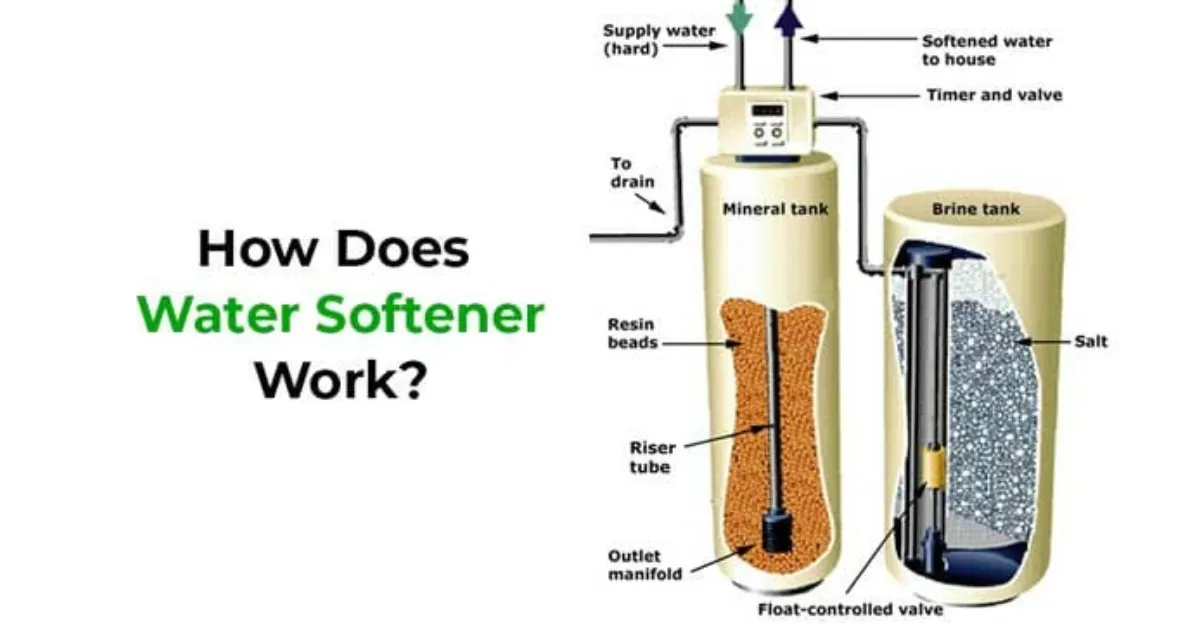
A salt-free water softener works by changing the structure of calcium and magnesium minerals so they are less likely to stick to pipes, water heaters, faucets, and appliances. Instead of removing these minerals, the system conditions the water to reduce scale formation. Most modern salt-free systems use Template Assisted Crystallization (TAC), a process that converts hardness minerals into microscopic crystals that pass harmlessly through your plumbing.
Because the minerals stay in the water, salt-free systems are more accurately called water conditioners rather than traditional water softeners.
Key Takeaways
| Question | Short Answer |
| Do salt-free water softeners remove calcium? | No. They condition calcium instead of removing it. |
| Do they use salt? | No. Salt is not required. |
| Do they require electricity? | Most systems do not. |
| Can they reduce scale buildup? | Yes, in many residential applications. |
| Do they make water feel slippery? | No, because hardness minerals remain. |
| Are they maintenance friendly? | Yes. Most require very little routine maintenance. |
What Is a Salt-Free Water Softener?
Despite the name, a salt-free water softener is actually a water conditioning system. Unlike traditional softeners that remove hardness minerals through ion exchange, these systems leave the minerals in your water while preventing them from forming hard deposits.
Hard water contains dissolved calcium and magnesium. Over time, these minerals collect inside pipes, water heaters, dishwashers, coffee makers, and washing machines. The result is a stubborn white scale, reduced appliance efficiency, higher energy bills, and increased maintenance.
Salt-free conditioning systems address this problem differently. Instead of exchanging minerals for sodium, they change the minerals into a stable crystalline form that is much less likely to attach to plumbing surfaces.
This approach has made salt-free systems increasingly popular among homeowners who want a low-maintenance solution without adding sodium to their water.
Many buyers also compare the upfront cost of a salt-free water softener system before deciding whether a traditional or salt-free unit offers better long-term value.
How Does a Salt-Free Water Softener Work?
Understanding the process is easier when you follow the water’s journey through the system.
Step 1. Hard Water Enters the System
Water enters the conditioning tank carrying dissolved calcium and magnesium minerals.
Unlike traditional water softeners, nothing is removed at this stage.
Step 2. Water Passes Through Special Media
Inside the tank is a specialized media designed for Template Assisted Crystallization (TAC).
As water flows across the media, microscopic crystal seeds begin forming.
These tiny crystals become attachment points for dissolved hardness minerals.
Step 3. Minerals Form Stable Crystals
Instead of remaining dissolved and sticking to plumbing fixtures, calcium and magnesium become microscopic crystals.
These crystals stay suspended in the water.
Because they are already crystallized, they are far less likely to bond with pipe walls, heating elements, shower heads, or faucets.
Step 4. Conditioned Water Flows Throughout the Home
The conditioned water continues through your plumbing system.
The minerals are still present, but they behave differently than untreated hard water minerals.
As a result, homeowners often notice:
- Less scale buildup
- Cleaner fixtures
- Better appliance performance
- Reduced water heater scaling
- Lower maintenance requirements
Does Salt-Free Technology Actually Remove Hardness?
No.
This is probably the biggest misconception surrounding salt-free systems.
Many homeowners believe these systems completely eliminate hardness.
They do not.
The calcium and magnesium remain in the water.
Instead, the system changes their physical structure so they are less likely to create stubborn mineral deposits.
That distinction is important because homeowners looking for completely softened water may be disappointed if they expect the same results as an ion exchange softener.
If you’ve ever wondered “does a water softener remove minerals”, the answer depends on the type of system. Traditional salt-based softeners remove hardness minerals through ion exchange, while salt-free systems condition those minerals without removing them.
Salt-Free Water Softener vs Traditional Water Softener
The biggest difference lies in how each system treats hardness minerals.
| Feature | Salt-Free System | Salt-Based System |
| Removes calcium | No | Yes |
| Removes magnesium | No | Yes |
| Uses salt | No | Yes |
| Requires regeneration | No | Yes |
| Uses electricity | Usually No | Usually Yes |
| Adds sodium to water | No | Yes |
| Reduces scale buildup | Yes | Yes |
| Produces soft feeling water | No | Yes |
| Maintenance | Low | Moderate |
Traditional systems remain the better choice for homes with extremely hard water because they physically remove hardness minerals.
Salt-free systems are often preferred by homeowners who want easier maintenance, no salt purchases, and environmentally friendly operation.
Do Salt-Free Water Softeners Work?
Yes, but understanding what “work” means is essential.
Many online reviews create confusion because people expect salt-free systems to deliver the exact same results as traditional water softeners.
That is not their purpose.
Instead, they are designed to reduce scale formation while preserving naturally occurring minerals.
For many households, that is exactly what they need.
Studies on Template Assisted Crystallization technology have shown promising results for reducing scale accumulation under appropriate water conditions. Organizations such as the Water Quality Association and independent testing laboratories have also evaluated several conditioning technologies used in residential systems.
Homeowners often report benefits including:
- Fewer white deposits on fixtures
- Longer appliance lifespan
- Less water heater scaling
- Reduced plumbing maintenance
- Lower cleaning effort around sinks and showers
However, people expecting slippery-feeling water or spot-free dishes similar to traditional softened water may notice a difference.
Understanding these expectations before purchasing is one of the most important steps in choosing the right system.
Do Salt-Free Water Softeners Really Work for Every Home?
Not always.
Performance depends on several factors, including:
- Water hardness level
- Household water usage
- Water chemistry
- Plumbing age
- Iron content
- Existing scale buildup
Homes with moderate hard water often see very good results.
Homes with extremely hard water, significant iron contamination, or complex water quality problems may require a traditional softener or a combination treatment system.
This is why many water professionals recommend testing your water before purchasing any treatment equipment.
Choosing the correct system based on actual water conditions almost always leads to better long-term performance than selecting one based only on marketing claims.
Many homeowners comparing premium brands also evaluate the culligan water softener monthly cost, kinetico water softener cost, and ecowater water softener price to understand whether a traditional salt-based system offers better value than a salt-free alternative over several years of ownership.
Pros and Cons of Salt-Free Water Softeners
Like any home water treatment system, salt-free water softeners have strengths and limitations. Understanding both sides can help you decide whether this type of system matches your household’s needs.
Pros
Low Maintenance
One of the biggest advantages is the minimal maintenance required. Unlike traditional softeners, there are no salt bags to buy, no brine tank to clean, and no regeneration cycles to monitor.
Most homeowners simply replace the conditioning media after several years, depending on the manufacturer and water usage.
No Electricity Required
Many salt-free systems operate entirely through water pressure. Since there are no electronic control valves or regeneration cycles, they continue working during power outages and can slightly reduce operating costs over time.
Environmentally Friendly
Because these systems do not discharge salty wastewater during regeneration, they are considered a more environmentally friendly option. Some municipalities even encourage salt-free systems where water conservation is a priority.
Keeps Beneficial Minerals
Calcium and magnesium remain in the water. These naturally occurring minerals are not removed, making salt-free systems appealing to homeowners who prefer not to add sodium to their household water.
Helps Protect Plumbing
While minerals remain in the water, they are less likely to stick to plumbing surfaces. This can help extend the lifespan of:
- Water heaters
- Tankless water heaters
- Dishwashers
- Washing machines
- Coffee makers
- Ice makers
- Plumbing fixtures
Cons
Does Not Produce True Soft Water
This is the biggest trade-off.
Soap may not lather as easily as it does with a traditional softener, and you may still notice some water spots on dishes or shower glass.
Not Ideal for Extremely Hard Water
Homes with very high hardness levels may benefit more from an ion exchange system, especially if hardness exceeds the manufacturer’s recommended range.
Existing Scale Is Not Removed Quickly
Salt-free systems help prevent new scales from forming, but they are not designed to instantly remove years of existing buildup inside pipes or appliances.
Over time, some homeowners notice gradual improvement, but results vary.
Who Should Choose a Salt-Free Water Softener?
Salt-free systems are often an excellent choice for homeowners who:
- Have mild to moderately hard water
- Want to reduce maintenance
- Prefer not to purchase salt regularly
- Want an environmentally friendly option
- Live in areas where salt discharge restrictions apply
- Want to protect appliances from scale buildup
However, they may not be the best fit if you:
- Have extremely hard well water
- Need complete hardness removal
- Want the slippery feel of softened water
- Have high iron or manganese levels
A professional water test is the best way to determine which solution fits your home’s specific water chemistry.
Common Myths About Salt-Free Water Softeners
Myth 1: They Remove Calcium
False.
Calcium remains in the water. Its structure changes so it is less likely to attach to plumbing surfaces.
Myth 2: They Work Exactly Like Salt-Based Systems
False.
The two technologies solve hard water problems differently.
Traditional systems remove hardness.
Salt-free systems condition hardness.
Myth 3: They Never Need Maintenance
False.
Although maintenance is minimal, every system eventually requires media replacement according to the manufacturer’s recommendations.
Ignoring maintenance can reduce effectiveness over time.
Myth 4: They’re Just a Marketing Gimmick
False.
Modern Template Assisted Crystallization technology has been evaluated in multiple independent studies and has shown effectiveness in reducing scale formation under appropriate water conditions.
The key is having realistic expectations about what the system is designed to accomplish.
How Much Does a Salt-Free Water Softener Cost?
Pricing varies depending on household size, flow rate, and brand.
In general, homeowners can expect:
| Expense | Typical Cost Range |
| Salt-free system | $800 to $3,000+ |
| Professional installation | $300 to $1,000 |
| Annual maintenance | Very low |
| Salt purchases | None |
| Electricity | Usually none |
If you’re comparing options, remember that the purchase price is only part of the equation.
A traditional softener may have a lower purchase price but ongoing costs for salt, maintenance, electricity, and occasional servicing.
If you’re planning a new installation, comparing water softener installation costs in San Antonio can also provide a realistic idea of labor expenses in one of the country’s largest water treatment markets.
Long-Term Maintenance Costs
One reason many homeowners choose salt-free systems is their lower ongoing ownership cost.
Unlike traditional softeners, you generally won’t have recurring expenses for:
- Salt deliveries
- Brine tank cleaning
- Regeneration water usage
- Additional electricity
Eventually, however, the conditioning media will need replacement.
Understanding water softener resin replacement cost for conventional systems can also help homeowners compare long-term maintenance between the two technologies, since salt-free systems use different conditioning media than traditional resin-based softeners.
Salt-Free vs Salt-Based: Which Is Better?
There isn’t one correct answer.
The better system depends on your home’s water quality and your priorities.
Choose a salt-free water conditioner if you want:
- Low maintenance
- No salt
- No electricity
- Reduced scale buildup
- Eco-friendly operation
Choose a salt-based softener if you want:
- Complete hardness removal
- Softer-feeling water
- Better soap performance
- Maximum protection in extremely hard water areas
Many homeowners compare premium brands before making a decision. Looking at the water softener rental cost per month for leased equipment can also help determine whether renting or purchasing makes better financial sense over several years.
Frequently Asked Questions
How do salt free water softeners work?
They condition calcium and magnesium minerals using technologies such as Template Assisted Crystallization (TAC), helping reduce scale buildup without removing the minerals.
How does a salt free water softener work compared to a traditional softener?
A traditional softener removes hardness minerals through ion exchange. A salt-free system changes how those minerals behave, making them less likely to stick to plumbing surfaces.
Do salt free water softeners work?
Yes. They are effective at reducing scale formation in many homes, but they do not create true soft water.
Do no salt water softeners work on well water?
They can, but results depend on water chemistry. Well water with high iron, manganese, or extremely high hardness may require additional treatment.
Are salt-free water softeners safe for drinking water?
Yes. Because they do not add sodium and leave naturally occurring minerals in the water, many homeowners prefer them for everyday household use.
How long do salt-free systems last?
Most quality systems last 10 to 20 years with proper maintenance. The conditioning media may need replacement based on manufacturer recommendations.
Do salt-free systems reduce water spots?
They can reduce scale deposits, but some spotting may still occur because hardness minerals remain in the water.
Can I install one myself?
Some homeowners choose DIY installation if they have plumbing experience. However, professional installation helps ensure the system is correctly sized and installed for maximum performance.
Are salt-free water softeners worth it?
For many households, yes. They offer lower maintenance, eliminate the need for salt, and help reduce scale buildup while preserving beneficial minerals.
Final Thoughts
So, how do salt free water softeners work? They don’t remove calcium and magnesium like traditional softeners. Instead, they use advanced conditioning technology to keep those minerals from forming hard scales inside your plumbing system and appliances.
For homeowners with mild to moderately hard water, a salt-free system can be a practical, low-maintenance solution that protects plumbing without requiring salt, electricity, or frequent upkeep. However, if your home has extremely hard water or high iron levels, a conventional salt-based softener may deliver better overall performance.
Before making a decision, test your water, compare both upfront and long-term costs, and choose a system that matches your household’s specific water conditions. Taking the time to evaluate your options now can help you enjoy cleaner plumbing, more efficient appliances, and lower maintenance costs for years to come.