Replacing or upgrading a water softener is an investment many homeowners face when their current system becomes inefficient, outdated, or unable to meet household water demands. The cost to replace a water softener varies widely, depending on the system type, size, brand, and whether you choose professional installation or a DIY approach.
On average, homeowners spend between $1,000 and $3,000 for a full replacement, with higher-end or high-capacity systems reaching $5,000 to $6,000. Beyond the upfront price, factors such as water hardness, plumbing complexity, and maintenance requirements also affect overall expenses.
A water softener replacement is not just about installing a new tank,it’s about ensuring consistent water quality throughout the home, protecting appliances, and reducing long-term maintenance costs.
For households experiencing scale buildup, frequent appliance repairs, or rising salt usage, upgrading to a modern system can be cost-effective and improve daily water use. Understanding the breakdown of costs, available system types, and ongoing maintenance will help homeowners make informed decisions tailored to their budget and water needs.
Signs You May Need to Replace Your Water Softener
Recognizing when to replace a water softener is critical. Even the best systems wear down over time, and continuing to operate a failing softener can increase plumbing repairs and household frustrations.
- Declining Water Quality: Hard water streaks on dishes, glassware, and faucets, as well as soap scum buildup in showers, indicate your system is underperforming.
- Salt Bridges and Frequent Refills: Excessive salt bridging or dramatically increased salt consumption can signal the resin beads are saturated or the control valve is failing.
- Age of the System: Most water softeners last 10,15 years. Beyond this point, repairs may become frequent and cost-prohibitive.
- Reduced Water Flow or Pressure: Mineral buildup inside the tank or plumbing connections may restrict water flow, indicating that replacement or a more robust system is needed.
- Appliance Issues: Hot water heaters, dishwashers, and washing machines show signs of scale accumulation or inefficiency despite proper maintenance.
In many cases, a water softener replacement can be more cost-effective than repeated repairs, particularly for older systems or those with frequent mechanical failures.
Factors Affecting the Cost to Replace a Water Softener
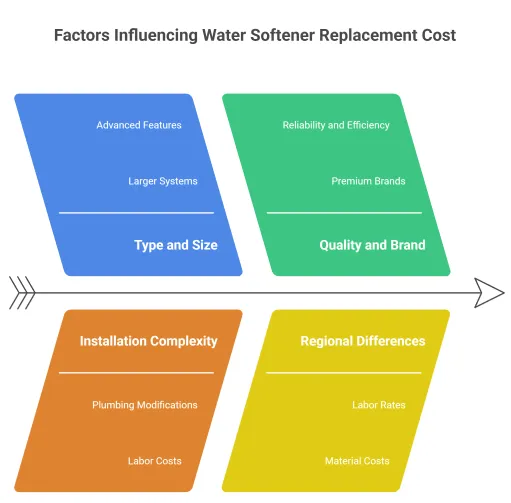
Several variables influence the cost of replacing a water softener. Understanding these can help homeowners budget realistically and choose the right system.
1. System Type
- Ion Exchange (Salt-Based): Traditional and most common. Units range from $500 to $2,000 for the tank, with installation adding $300,$700. Salt-based systems are highly effective at removing hard minerals and provide consistent water softening.
- Salt-Free (Water Conditioners): Cost between $800 and $4,000 installed. These systems prevent scale buildup rather than removing minerals and require less ongoing maintenance.
- Dual-Tank Systems: Premium option offering continuous soft water without downtime. Replacement costs run $1,500,$5,000, often used in large households or high-demand scenarios.
- Magnetic/Electronic: Low-cost ($200,$600), with mixed effectiveness. These systems condition water using magnetic or electronic fields but do not remove hardness completely.
Example: A family of four in a home with very hard water may find that replacing an old salt-based system with a dual-tank setup for $3,500 saves money long-term by reducing scale-related repairs.
2. System Capacity and Household Size
Larger households need higher-grain capacity systems. A 32,000-grain softener may suffice for a small family, but homes with multiple bathrooms or high water usage often require 48,000,64,000 grain systems, increasing the unit cost.
3. Installation Complexity
Replacing a water softener in an accessible basement with existing plumbing is straightforward and less expensive. Homes requiring rerouting pipes, upgrading valves, or installing additional drains may face higher labor costs.
4. Water Hardness
Extremely hard water (above 15 grains per gallon) may require a larger system or more frequent regeneration cycles, increasing salt and maintenance costs.
5. Removal of Old System
Some contractors include removal in the installation cost, while others charge $50,$150. If the old softener is difficult to access or partially broken, removal can add complexity and cost.
Cost Breakdown by Brand and Installation Type
| Brand / System Type | Unit Cost | Professional Installation | Total Estimated Cost | Notes |
| Culligan (Salt-Based) | $1,500,$2,500 | $500,$700 | $2,000,$3,200 | Reliable, long-lasting, easy maintenance |
| Kinetico (Dual-Tank, Premium) | $2,500,$3,500 | $500,$700 | $3,000,$4,200 | Minimal maintenance, continuous soft water |
| EcoWater (Salt-Based / Salt-Free) | $1,200,$2,000 | $400,$600 | $1,600,$2,600 | Budget-friendly, compact systems available |
| Puronics | $1,800,$3,000 | $500,$700 | $2,300,$3,700 | Advanced filtration options, solid warranties |
| Hague | $2,000,$3,500 | $500,$700 | $2,500,$4,200 | Premium quality, low-maintenance |
| Salt-Free Water Conditioner | $800,$4,000 | $300,$700 | $1,100,$4,700 | Prevents scale, minimal maintenance |
| Magnetic / Electronic | $200,$600 | $100,$300 | $300,$900 | Low-cost, effectiveness varies |
Real-life example: Replacing a 12-year-old Culligan system in a medium-sized home with a modern EcoWater Systems salt-free conditioner might cost $2,100 installed. While more expensive upfront than simply replacing the resin in the old unit, the new system requires less maintenance, uses no salt, and can reduce long-term water softener rental cost.
DIY vs Professional Replacement
Replacing a water softener yourself can save $300,$700 in labor, but there are several factors to consider:
DIY Replacement Advantages
- Lower labor cost.
- Complete control over installation timing.
- Can choose custom system upgrades or accessories.
DIY Challenges
- Requires plumbing knowledge, tools, and understanding of bypass valves.
- Risk of leaks, incorrect installation, or damage to the water line.
- May void manufacturer warranty if professional installation is required.
Pro Tip: For most homeowners, professional installation ensures proper system integration, full warranty coverage, and long-term peace of mind. Local professionals often include removal of the old system and can adjust the unit to match household water usage.
Hidden Costs to Consider
- Resin Replacement: If the softener tank is in good shape, replacing resin beads can cost $200,$400,cheaper than a full replacement.
- Control Valve or Head Repairs: Valves can wear out, costing $300,$500. In some cases, a valve replacement may extend the life of the system by 5,10 years.
- Salt and Maintenance: Salt-based systems require $5,$20 per month for salt, plus annual cleaning of the brine tank.
- Water Testing: Professional testing runs $100,$200. Home kits cost $10,$30 but provide less accuracy.
- Permits or Plumbing Upgrades: Certain municipalities require permits for plumbing modifications, adding $50,$200.
Salt vs Salt-Free Options

Salt-Based Systems
- Pros: Effective softening, proven technology, widely available.
- Cons: Requires regular salt replenishment, uses water during regeneration, higher ongoing costs.
Salt-Free Conditioners
- Pros: Low maintenance, no salt or brine discharge, energy-efficient.
- Cons: Does not remove hardness, may not be suitable for extremely hard water, higher upfront cost for premium models.
Choosing between these systems depends on household water quality, environmental concerns, and maintenance preferences. For example, homes on well water with 20+ grains per gallon may still benefit from salt-based systems.
Learn more about salt-free water softeners for comparison with traditional systems.
Step-by-Step Cost-Saving Tips for Replacement
- Test Your Water First: Knowing your exact hardness level helps choose the right system and avoid overpaying for capacity you don’t need.
- Consider Resin Replacement: Extending the life of your tank by swapping resin can save hundreds.
- Compare Brands: Check options like Kinetico and EcoWater to balance price and reliability.
- DIY Minor Install Tasks: Removing the old unit or prepping the area yourself can reduce labor costs.
- Check for Rebates: Some municipalities or utilities offer rebates for water-efficient systems.
Common Mistakes to Avoid
- Installing an undersized system for household water usage.
- Skipping professional water testing before purchase.
- Choosing the lowest-cost system without considering long-term maintenance.
- Ignoring plumbing upgrades needed for proper installation.
- Overlooking warranties or service agreements.
Life Expectancy and Maintenance
- Typical Lifespan: 10,15 years for most softeners.
- Resin Beads: Replace every 10,12 years or when efficiency drops.
- Valve Maintenance: Inspect and clean annually; replace if faulty.
- Salt Maintenance: Monthly refill and yearly brine tank cleaning.
Example: A homeowner with a 13-year-old EcoWater system notices rising salt usage and cloudy dishes. Replacing the resin and cleaning the valve costs $350, extending system life without full replacement.
When Upgrading Is Cost-Effective
- The old system fails repeatedly and repair costs exceed $500,$700.
- Household water demands increase due to family growth or new appliances.
- Significant improvement in water quality and appliance longevity outweighs upfront cost.
- Considering environmental factors like water conservation or eliminating salt discharge.
FAQs
How much does it cost to replace a water softener?
Replacement typically ranges from $1,000 to $3,000 for the unit and professional installation. High-capacity or dual-tank systems can exceed $5,000.
Can I replace a water softener myself?
Yes, but only if you have plumbing experience. DIY installation can save labor costs but may void warranties if professional installation is required.
When is upgrading a water softener cost-effective?
Upgrading makes sense when your system is over 10 years old, repairs are becoming frequent, or household water demand has increased.
How long does installation take?
Professional installation usually takes 2,4 hours, depending on plumbing complexity and system type.
Does removal of the old system cost extra?
Some installers include removal in the price. If not, removal typically adds $50,$150.
How often should salt-based systems be maintained?
Salt should be refilled monthly, and the brine tank cleaned annually. Resin beads generally need replacement every 10-12 years.
Are salt-free systems cheaper long-term?
They have lower maintenance costs but higher upfront prices. They help prevent scale but do not fully soften water.
Do water softener costs vary by location?
Yes, local labor rates, permit requirements, and regional regulations can significantly impact total costs.
Can replacing a water softener save on utility bills?
Yes, soft water improves water heater efficiency, reduces detergent use, and helps appliances last longer.
How do I choose the right size system?
Estimate daily water usage per person and measure household water hardness. Oversized systems waste money, while undersized systems regenerate too often.
Conclusion
Replacing or upgrading a water softener is a strategic investment in household comfort, appliance longevity, and plumbing health. Costs vary based on system type, brand, capacity, installation complexity, and the average cost of Culligan water softener models. Salt-based systems remain highly effective, while salt-free conditioners provide low-maintenance alternatives.
Proper sizing, professional installation, and regular maintenance ensure optimal performance and long-term savings. Evaluating your household needs and considering the total cost of ownership, including repairs and maintenance, will help determine when replacement is the most cost-effective choice.