Installing a water softener is more than just an upgrade for your plumbing,it’s an investment in your home’s long-term efficiency and appliance lifespan. A home with hard water faces mineral buildup in pipes, spotty dishes, and reduced performance of water heaters and laundry appliances. Understanding the cost of water softener system installation, including loop installation, labor, materials, and maintenance, is essential for budgeting effectively and choosing the right system for your household.
The cost of a full water softener system installation varies widely depending on the type of system, household size, brand, and installation complexity. On average, homeowners spend between $1,000 and $3,000 for professional installation of a complete system, including a standard ion-exchange softener.
Smaller units or DIY installations may start around $500, while premium or salt-free systems can reach $6,000 or more. Additional expenses may include plumbing modifications, electrical connections, permits, and removal of an old unit.
This comprehensive guide breaks down system types, installation costs, professional vs. DIY options, loop installation, brand-specific pricing, maintenance, and hidden costs so you can make a confident, cost-effective decision.
Understanding Water Softener Installation Costs
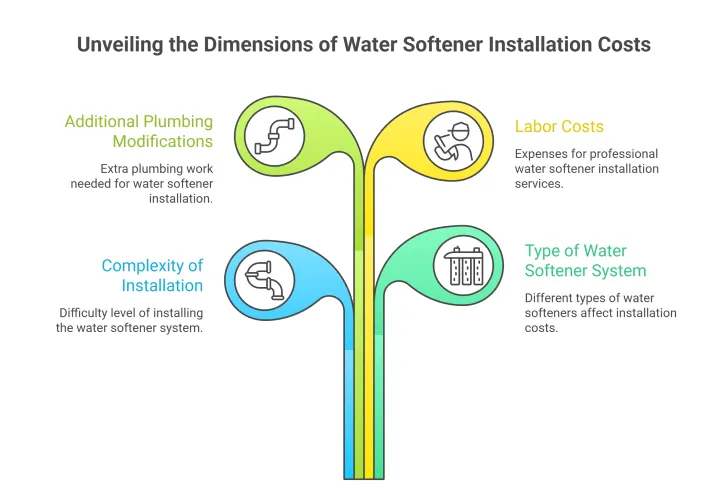
Water softeners function by removing calcium and magnesium ions from your water, reducing scale buildup and making soap more effective. The water softener system install cost depends on several key factors:
- System Type: Salt-based ion exchange systems are the most common and generally cheaper than salt-free alternatives. Salt-free systems or high-capacity smart units can significantly increase cost.
- Household Size & Water Usage: Larger households or homes with multiple bathrooms require a higher grain-capacity unit, often adding $300–$800 to the base price.
- Installation Complexity: Adding a new water softener loop, modifying plumbing lines, or installing electrical connections can add hundreds or even thousands to labor costs.
- Labor Rates: Licensed plumbers charge between $200 and $500 for standard installations, though complex jobs with loop installation can reach $1,000 or more.
- Additional Costs: Removing an old system, securing permits, or adding bypass valves increases total expenses.
On a national level, a typical water softener installation,including labor and unit,averages around $1,500, but budgeting for extremes ensures you’re prepared for surprises.
Cost Breakdown by System Type
| System Type | Unit Cost | Professional Installation | Total Estimated Cost | Notes |
| Small Ion-Exchange | $500–$1,000 | $200–$500 | $700–$1,500 | Suitable for 1–3 person households |
| Standard Ion-Exchange | $800–$1,500 | $300–$600 | $1,100–$2,100 | Most common for 3–5 person homes |
| High-Capacity / Smart | $1,500–$3,000 | $500–$1,000 | $2,000–$4,000 | Includes large homes or smart tech features |
| Salt-Free Systems | $500–$3,000 | $300–$700 | $800–$3,700 | Ideal for homeowners avoiding sodium; efficiency varies |
| Dual-Tank Systems | $1,000–$5,000 | $500–$1,200 | $1,500–$6,200 | Continuous soft water without downtime |
Example: A family of four installing a standard Culligan ion-exchange softener may spend $1,800–$2,500, including professional installation. Choosing a Kinetico dual-tank system could push costs above $3,000, but it reduces maintenance frequency.
Water Softener Loop Installation Cost
Some homes require a water softener loop, a bypass line allowing water to bypass the softener in certain areas (like outdoor spigots or irrigation systems). Installing this loop adds complexity, increasing labor and material costs.
- Typical Cost: $200–$800 depending on piping complexity and distance from the main water line.
- DIY Option: For those comfortable with plumbing, adding a loop using PVC or copper pipes may save $150–$400. However, improper installation can lead to leaks or cross-contamination, risking appliance damage.
Do This / Don’t Do This Example:
- Do: Install a bypass loop professionally if your home has multiple water sources or irrigation.
- Don’t: Skip a bypass on outdoor lines,it can lead to hard water buildup in irrigation systems or garden equipment.
For guidance on calculating a water softener loop cost, see cost to install water softener loop.
DIY vs Professional Installation
Installing a water softener yourself can save money, but it requires plumbing experience, proper tools, and understanding of local building codes.
DIY Pros:
- Lower upfront cost (save $200–$500 on labor).
- Immediate control over installation timing.
DIY Cons:
- Risk of leaks, improper connections, or reduced softener efficiency.
- Voiding manufacturer warranty if not installed by a licensed professional.
- Difficulty with complex setups like dual-tank or loop installations.
Professional Installation Benefits:
- Ensures code compliance, proper connections, and leak-free setup.
- Access to service guarantees, maintenance plans, and manufacturer-approved installation.
- Peace of mind for complex plumbing or electrical work.
For professional costs in your area, check labor cost to install water softener.
Brand-Specific Water Softener Costs
Different brands offer varying quality, capacity, and pricing. Here’s a snapshot:
| Brand | Installed Cost Range | Features & Notes |
| Culligan | $1,800–$5,000+ | Premium service, reliable support, widely available maintenance. See culligan water softener installation cost. |
| Kinetico | $2,500–$6,000+ | Dual-tank, non-electric models, low-maintenance, high-capacity. Check how much kinetico water softener cost. |
| EcoWater | $1,500–$3,500 | Salt-free options, smart features, smaller footprint. More budget-friendly; see cost of ecowater water softener. |
| Puronics | $1,800–$4,000 | Reliable for moderate to large households, good warranty coverage. |
| Hague | $2,000–$4,500 | High-capacity systems, suitable for large homes or iron-heavy water. Check the cost of hague water softener. |
Example: A 3-bathroom home may consider a Culligan for reliability, Kinetico for low-maintenance dual tanks, or EcoWater for salt-free, cost-conscious performance.
Hidden Costs to Consider
Many homeowners underestimate the following:
- Old Unit Removal: $50–$200 for professional removal.
- Permits: $100–$500 depending on your city.
- Electrical or Drain Modifications: $150–$500 if outlets or drains need upgrades.
- Water Testing: $20–$100 for a professional test, crucial for sizing.
- Brine Tank Salt: $5–$20 per month for typical use.
Tip: Include at least 15–20% extra in your budget to cover unexpected plumbing adjustments or feature add-ons.
Maintenance & Replacement Costs
Maintaining a water softener keeps it efficient and extends its life.
Routine Maintenance:
- Check brine salt monthly.
- Clean brine tank annually.
- Inspect bypass valves and connections.
Resin Replacement:
- Typical replacement every 10–15 years.
- Costs: $200–$600 depending on system size and brand. See water softener resin replacement cost.
Repairs:
- Minor leaks, control valve adjustments, or bypass valve replacements: $100–$300.
- Major repairs on dual-tank systems: $500+. See water softener repair cost.
Operating Costs:
- Salt: $60–$240/year.
- Water for regeneration: minimal, usually under $20/year.
- Electricity: $10–$15/year for standard systems.
Example: A standard EcoWater system serving a 4-person household may cost about $15/month for salt and water usage, plus periodic resin replacement.
Common Mistakes & Misconceptions
- Undersized Systems: Choosing a system too small results in frequent regenerations, high salt use, and ineffective softening.
- Skipping Bypass Loops: Outdoor lines and irrigation systems suffer if soft water is forced through them unnecessarily.
- DIY Installation Risks: Incorrect plumbing or bypass connections can void warranties and reduce system lifespan.
- Ignoring Water Testing: Not testing water hardness may lead to overspending on an oversized system or choosing the wrong type.
Do This / Don’t Do This Example:
- Do: Test water before selecting a system to determine correct grain capacity.
- Don’t: Buy a system based solely on advertised brand size without considering household water usage.
Step-by-Step DIY Cost-Saving Tips
- Pre-measure your water usage: Helps choose the right system size without overbuying.
- Compare brands online: Look for warranties and maintenance costs, not just initial price.
- Use quality materials: Pipes, valves, and fittings may be inexpensive upfront but prevent costly repairs later.
- Consider off-peak installation: Hiring a plumber during slower months may reduce labor costs.
- Check local permits: Avoid fines by ensuring compliance with plumbing codes.
- Plan loop placement efficiently: Reduces labor and pipe usage.
Frequently Asked Questions
What is the average cost to install a water softener?
Professional installation typically averages $1,000–$3,000, including the unit, labor, and standard plumbing connections.
Can I install a water softener myself?
Yes, if you have plumbing experience. However, systems requiring complex plumbing or a dedicated softener loop are usually safer to install professionally.
How much does a water softener loop add to the cost?
A professionally installed softener loop generally adds $200–$800, depending on access, pipe routing, and home layout.
How long does installation take?
Most standard systems take 2–4 hours to install. Dual-tank units or homes needing complex loops can take up to 6 hours.
Are salt-free systems effective?
They help reduce scale buildup but do not remove hardness minerals like traditional sodium-based softeners. Effectiveness depends on household water needs.
How often do I need to refill salt?
Most salt-based systems need refilling about once per month, depending on household size and water hardness levels.
What brands are most reliable?
Well-known and widely trusted brands include Culligan, Kinetico, and EcoWater.
What are hidden costs to expect?
Permits, removal of an old unit, plumbing or electrical upgrades, and optional features can add $200–$1,000 to the total cost.
How much does maintenance cost?
Ongoing costs for salt, water, and electricity average about $15–$30 per month. Resin replacement is typically needed every 10–15 years.
Can a water softener save money long-term?
Yes. Softer water reduces appliance wear, lowers soap and detergent use, and improves water heater efficiency, helping offset upfront and operating costs over time.
Conclusion
The cost of water softener system installation depends on your home size, water quality, system type, and whether you choose a DIY or professional approach. Planning ahead, factoring in loop installation, maintenance, and hidden costs ensures you choose the system that best fits your household’s needs and budget. Premium systems like Kinetico or dual-tank setups offer minimal maintenance, while budget-friendly options from EcoWater or standard ion-exchange units provide solid performance without breaking the bank.
For homeowners looking to maximize longevity, efficiency, and savings, a professionally installed system paired with proper maintenance is the smartest choice. Knowing the full spectrum of costs,from unit price to brine salt,allows for informed decisions and long-term satisfaction with your water quality.
For further information, check related resources: average cost of water softener system, cost to service water softener, and culligan water softener maintenance cost.