
The cost of a water softener installed in a U.S. home typically ranges from $1,000 to $3,000, including the system and professional labor. Smaller or DIY-friendly setups can land closer to $600–$900, while larger whole-house or premium systems can exceed $4,000. Pricing depends on the type of softener, system size, plumbing conditions, brand choice, and whether installation is handled professionally or done yourself. Ongoing expenses like salt, routine service, and occasional part replacement also factor into the long-term cost. Understanding these variables helps homeowners choose a system that fits both their water needs and budget without surprises later.
What Drives the Cost of a Water Softener Installed
When homeowners ask about water softener installed cost, they’re usually thinking about one number. In reality, the total price is made up of several smaller decisions that add up quickly.
System Type and Technology
Salt-based systems remain the most common choice in U.S. homes. They physically remove calcium and magnesium, which means you’ll see real changes in water feel, appliance performance, and scale buildup. These systems usually cost more upfront than salt-free units, but they deliver measurable soft water.
Salt-free systems are often cheaper to buy and easier to maintain, but they don’t actually soften water. Instead, they condition it to reduce scale. That difference matters when comparing prices.
Dual-tank systems cost more but provide continuous soft water, which is valuable for larger households with high daily usage.
Home Size and Water Usage
A two-person condo doesn’t need the same system as a five-bedroom home with multiple bathrooms. Larger systems cost more because they use bigger resin tanks, stronger valves, and higher grain capacity.
Most households fall into the 32,000–48,000 grain range, which balances cost and performance. Oversizing adds unnecessary expense, while undersizing leads to frequent regeneration and higher salt use.
Plumbing Layout and Installation Complexity
Homes with modern PEX plumbing are faster and cheaper to work on than older homes with copper or galvanized lines. If a plumber needs to cut into walls, reroute pipes, or install a new water loop, labor costs increase.
Basement installations are usually straightforward. Tight crawl spaces or garage setups can raise labor pricing.
Average Cost of a Water Softener Installed in the U.S.
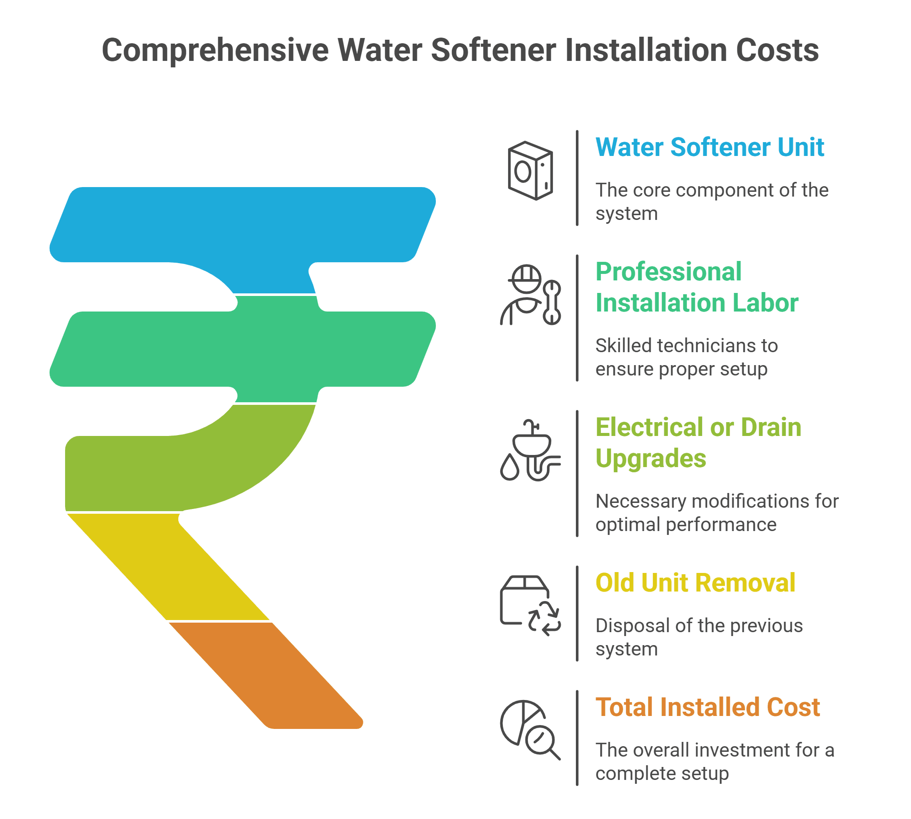
Here’s how costs typically break down for most households:
| Cost Category | Typical Range |
| Water softener unit | $500 – $3,000 |
| Professional installation labor | $200 – $1,000 |
| Electrical or drain upgrades | $0 – $900 |
| Old unit removal | $50 – $300 |
| Total installed cost | $1,000 – $3,000+ |
A standard salt-based system installed in a suburban home usually lands around $1,400 to $1,800 all-in.
If you’re comparing numbers, it helps to review detailed breakdowns like this water softener install cost resource, which shows how pricing shifts by home type and region.
Low-End, Mid-Range, and High-End Price Scenarios
Low-End Installed Cost: $500–$900
This range usually involves:
- Small-capacity units
- DIY installation or minimal professional labor
- Existing plumbing and electrical hookups
- Basic controls with limited features
This works best for apartments, small households, or homeowners comfortable handling plumbing connections themselves.
Mid-Range Installed Cost: $1,000–$2,500
Most homeowners fall into this category. It typically includes:
- Whole-house salt-based systems
- Professional installation
- Standard warranty coverage
- Reliable long-term performance
For most families, this price range delivers the best balance of cost and results.
High-End Installed Cost: $3,000–$6,000+
Higher pricing usually reflects:
- Premium brands or proprietary systems
- Dual-tank designs
- Advanced metered regeneration
- Complex plumbing or electrical upgrades
These systems are often chosen for large homes, very hard water, or homeowners who want minimal maintenance.
Water Softener Installation Cost: DIY vs Professional
Choosing between DIY and professional installation can shift your total cost significantly.
DIY Installation Costs
DIY installation typically costs:
- $500 to $1,200 total
- No labor charges
- Higher personal time investment
DIY works best when:
- Plumbing is easily accessible
- No electrical upgrades are required
- The system includes clear instructions and bypass valves
Mistakes, however, can get expensive quickly. Incorrect pipe connections or drain setups often lead to leaks or poor performance.
Professional Installation Costs
Professional installation usually costs:
- $200 to $1,000 in labor
- Faster setup
- Proper system calibration
- Code-compliant connections
Salt-Based vs Salt-Free Installed Cost Comparison
| System Type | Installed Cost Range | Best For |
| Salt-based | $1,000 – $3,000 | True soft water, scale removal |
| Salt-free | $800 – $2,500 | Scale control, low maintenance |
| Dual-tank | $2,000 – $4,500 | Large households |
| Magnetic or electronic | $300 – $800 | Mild hardness only |
Salt-free systems look cheaper at first, but many homeowners switch later when they don’t see the expected results. That second installation doubles the expense.
Brand-Specific Water Softener Installed Costs
Brand choice plays a major role in total pricing, warranty coverage, and long-term reliability.
Culligan Water Softener Cost Installed
Culligan systems are often sold through dealers and include professional installation. Typical installed pricing ranges from $1,800 to $2,500.
They’re known for service support and brand recognition, but proprietary parts can increase maintenance costs. For detailed pricing, see this water softener cost Culligan overview.
Kinetico Installed Cost
Kinetico systems are premium, non-electric units with high efficiency. Installed costs often start around $3,000 and can exceed $5,000.
EcoWater Installed Pricing
EcoWater offers a mix of budget and mid-range systems. Installed costs usually fall between $1,400 and $2,800, depending on system size.
They’re a solid option for homeowners who want professional installation without premium pricing. See EcoWater softener cost for current averages.
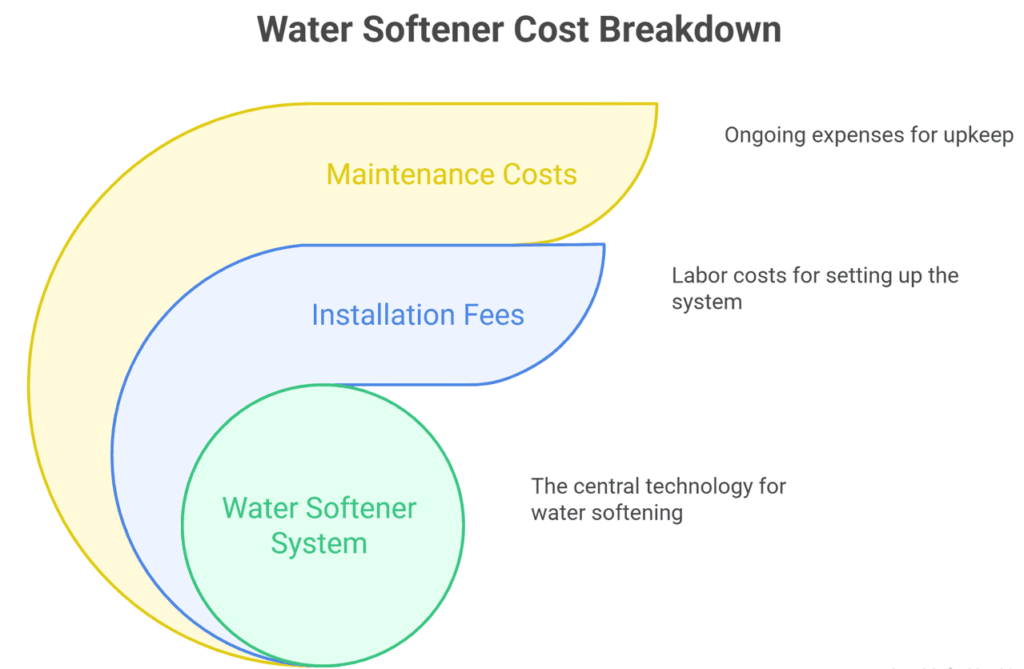
Ongoing Maintenance and Monthly Operating Costs
The installed price isn’t the end of the expense.
Salt and Supplies
Salt-based systems typically cost:
- $5 to $15 per month for salt
- $60 to $180 annually
Higher-capacity systems use more salt, but efficient metered units reduce waste.
Routine Service and Repairs
Most systems need occasional service:
- $150 to $300 for annual checkups
- Resin replacement every 8–12 years
For a closer look, this water softener service cost resource explains common repair expenses.
Resin Replacement Costs
Resin replacement typically costs $400 to $1,000, depending on system size. This water softener rebedding cost page explains when replacement makes sense versus full system replacement.
Hidden Costs Homeowners Often Miss
Even careful buyers get caught off guard by extra charges.
Common overlooked costs include:
- Electrical outlets near installation location
- Drain line extensions
- Permit fees in some cities
- Old unit removal and disposal
If you’re replacing an older system, check this water softener removal cost breakdown before finalizing your budget.
Real-Life Cost Examples
A three-person home in Ohio with moderately hard water installed a 40,000-grain salt-based system. The unit cost $1,100, labor was $450, and minor plumbing adjustments added $120. Total installed cost came to $1,670.
A larger home in Arizona chose a dual-tank system due to high hardness levels. The system cost $2,800, labor was $900, and electrical work added $300. Total installed cost reached $4,000.
Common Mistakes That Increase Installation Costs
Don’t do this: Buy the biggest system “just in case.” Oversizing increases cost without improving results.
Do this: Size the system based on actual household usage and water hardness.
Don’t do this: Ignore plumbing compatibility.
Do this: Have plumbing assessed before purchasing to avoid surprise labor charges.
Renting vs Buying a Water Softener
Some homeowners consider renting instead of buying. Rental costs typically range from $25 to $60 per month. Over five years, that adds up to $1,500 to $3,600.
For short-term living situations, renting can make sense. Long-term homeowners usually spend less by buying outright. This rent water softener cost comparison shows how costs stack up over time.
How to Lower the Cost of a Water Softener Installed
Smart planning can reduce your total expense:
- Test water hardness before buying
- Avoid unnecessary upgrades
- Compare at least three installation quotes
- Install near existing plumbing and drains
- Choose metered systems to reduce salt use
Even small decisions can save hundreds over the life of the system.
Frequently Asked Questions
How much does a water softener cost on average?
Most homeowners pay between $1,000 and $3,000, depending on system type and installation complexity.
Is professional installation worth the cost?
For most homes, yes. Professional installation reduces leak risk and ensures proper calibration.
Can I install a water softener myself?
DIY installation is possible for basic setups, but mistakes can quickly erase savings.
How long does installation take?
Most professional installs take 2 to 4 hours.
Do salt-free systems really soften water?
No. They reduce scale but do not remove hardness minerals.
How much does maintenance cost per year?
Expect $100 to $300 annually for salt and minor service.
Does a water softener increase home value?
While it doesn’t directly raise value, it improves appliance lifespan and buyer appeal.
When should a system be replaced?
Most systems last 10 to 15 years with proper maintenance.
Final Thoughts:
The cost of a water softener installed depends on more than just the unit price. System type, home size, plumbing conditions, and brand choice all shape the final number. For most U.S. households, a professionally installed system in the $1,500 range delivers reliable soft water, manageable maintenance, and long-term protection for plumbing and appliances. Taking time to size the system correctly and understand ongoing costs helps ensure the investment pays off for years to come.